


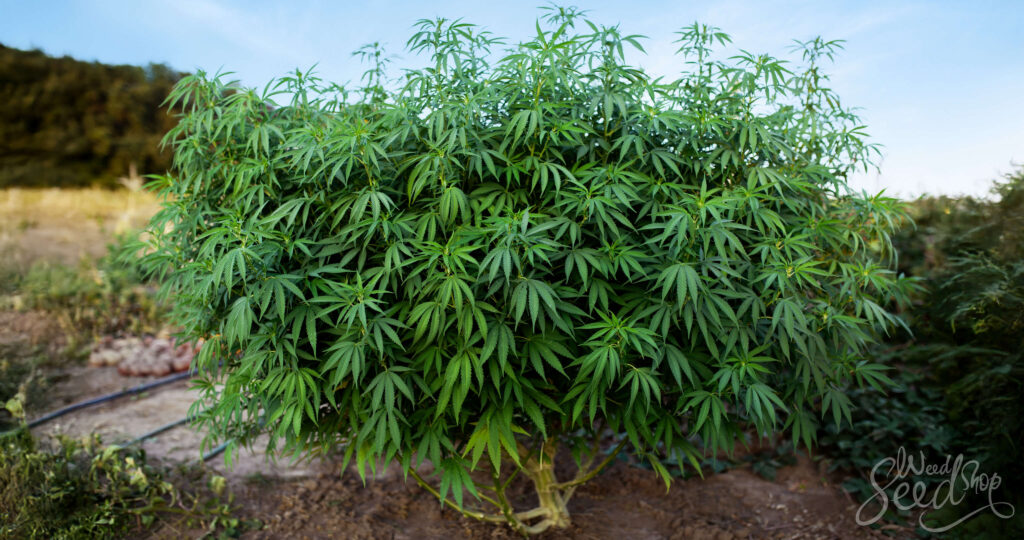
While many growers might prioritise efficient use of space or utmost discretion, some farmers are committed to pushing weed plants to their limits. While growing weed trees might not be an option for everyone, these 7 tips are sure to help any grower increase their yields.
Let’s face it- if you want a cannabis plant to reach its full potential, it needs to be grown outdoors. While a ‘tall’ strain will grow taller than a ‘compact’ strain indoors, that same ‘tall’ strain will grow significantly larger outdoors. If you’re aiming for massive plants, the open air is the way to go. That said, many of these tips will still be useful for indoor growers, so keep reading, even if our focus is primarily on outdoor cultivation.
1. Pick the right genetics
If your goal is to grow the biggest, most productive plant out there, then you’re going to need to plan accordingly. Not every weed strain is created equally; and certain strains will fare much better than others if you’re looking to grow the tallest plants around. What makes for a good weed strain for outdoor growing? Let’s break down the three major components: indica/sativa ratio, flowering time, and flowering type.
Indica/sativa ratio
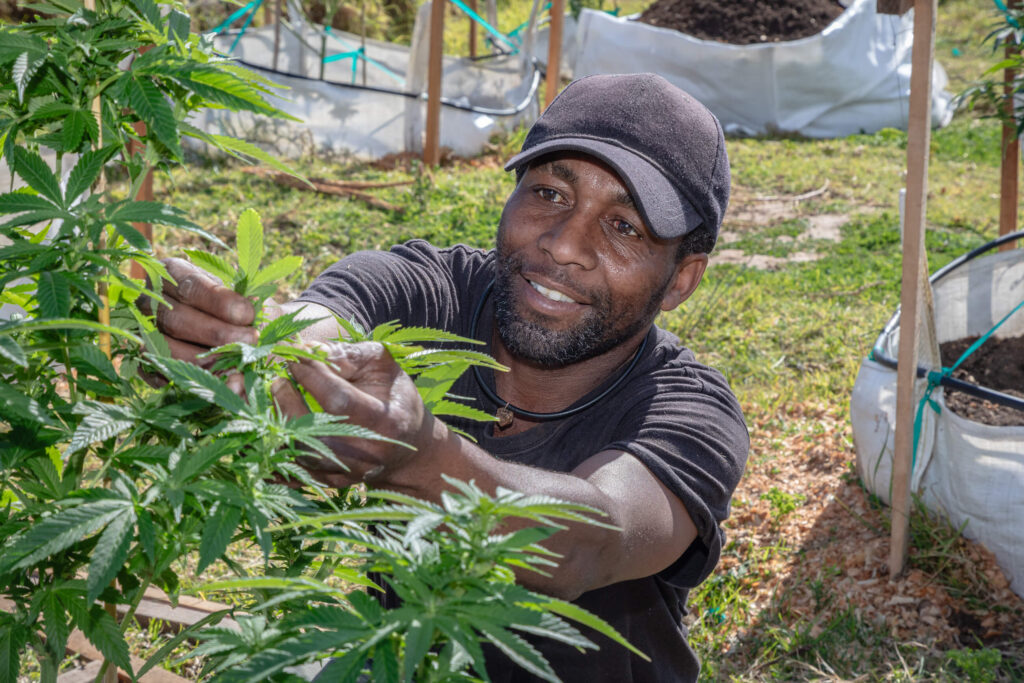
As a general rule, sativas typically grow taller and produce more weed per plant than indicas. However, indicas tend to grow denser buds and often produce more per square meter than sativas. How can these both be true?
Sativa-dominant strains tend to be tall and spindly, with elongated branches and larger internodal spaces. Many sativa strains can grow to well over 4 metres tall and develop equally massive root systems to support this growth. The flowers from sativas are often lighter and airier with less resin.
On the other hand, indica-dominant strains are commonly shorter and bushier, with most staying under 2 metres in height. These plants typically grow much denser, heavier flowers with a greater concentration of resin.
With these basic ideas in mind, the best strains for growing the most productive outdoor cannabis plants will often feature some degree of both; sativa genetics for height and indica for dense flowers. Overall, though, you want a strain that is sativa-dominant while still possessing at least some indica genetics.
Strains like Gorilla Haze and Super Silver Cheese make great choices. Both of these are sativa-dominant hybrids that can easily exceed 2 metres in height when grown outdoors. We’ve made it easy for you and made an overview of our tallest plants.
Flowering time
More time spent growing means a bigger plant. Many strains keep growing all the way until harvest, though this growth slows down rapidly after the first few weeks of flowering. Even still, a strain that has a flowering time of 12-14 weeks will simply grow taller than strains with flowering times of 8-9 weeks. Generally, sativas have longer flowering times than indicas.
However, it’s important to keep the length of your growing season in mind as some strains might take too long to flower in certain regions. I’ll go into more detail on this in Point 4 below.
Flowering type
While autoflowering strains are incredibly popular these days, they’ll never be able to reach the same heights as photoperiod seeds. Since autoflowering plants grow at their own, predetermined schedule, it’s impossible to grow them long enough to compete with classic feminized seeds.
If your goal is to grow massive weed trees, then you’re going to need to stick with photoperiod strains.
Related post

2. Pick the right space
Now that you’ve selected your strain, it’s time to find the perfect spot. Ideally, you want a flat (or gently sloping), even space with no overhead obstructions to maximise the light available to your weed plants. Keeping that in mind, try to find an area facing south (if you’re in the northern hemisphere).
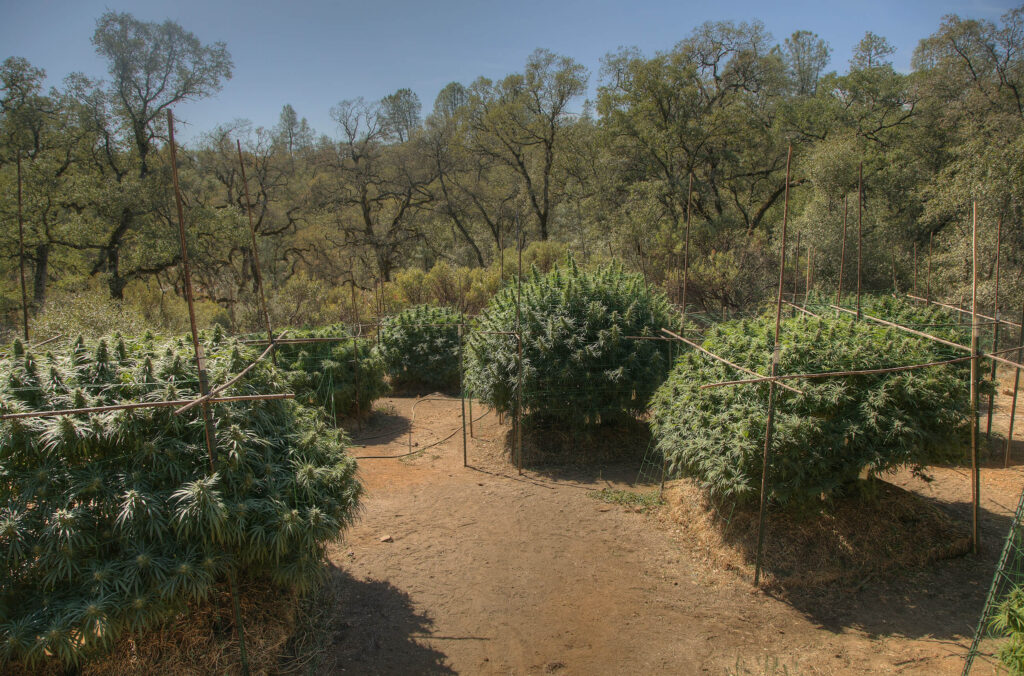
It’s also important to keep in mind how many plants you want to grow. If you’re aiming for 3-metre tall trees, then you’ll need to space your plants out a fair bit. While each strain is different, there are a few guidelines to consider.
On average, the area that a plant needs can be estimated based on the plant’s desired height. For example, let’s say that I am trying to grow a 3-metre-tall weed tree, how much space should I give it? Well, take half the expected height (1.5 metres in this case) and draw a line from the centre of your plant straight out.
This is the minimum radius that your plant should have to itself. Note that this is a rough estimation and it’s almost always better to give a plant too much space instead of not enough. Growing weed trees is all about growing a few massive plants, so give them the space they need to thrive.
Creating the perfect outdoor grow space is tricky. Check out my complete guide to get started.
3. Bigger pots = bigger plants

A plant is only able to grow as large as its roots can support. Therefore, a larger pot will allow for larger plants. Easy, right? Well, kind of. While you might think that it’s best to just drop the seeds into the ground and let nature take its course, this isn’t the best approach.
Nine times out of ten, the soil in your backyard isn’t going to be up to the job of growing a truly massive weed tree, and every outdoor gardener worth their salt knows that you need to use specially-fertilised soil. This can be done by either digging a hole and filling it with your new soil mixture or by using above-ground pots.
But just how much soil do these giant plants need? That’s pretty complicated and depends on factors such as the local environment, the exact strain, your substrate, drainage, and so much more. Sadly, there’s no one-size-fits-all number here.
However, many outdoor growers in places like California, where legal outdoor weed farms are a common feature, will put their plants in pots (or holes) that are anywhere from 1000 to 1500 litres in size. That might sound like a lot of soil and, well, it is. But a 3 to 4-metre plant will require an equally massive root structure to both support its continued growth and to keep it firmly anchored in place.
Related post

4. Timing is everything
Knowing the perfect time to plant your seeds is a challenge that traces back to the very earliest days of agriculture. Plant too soon, and you risk a late frost destroying your delicate crops. Too late, and things might not be ready to harvest when the season changes again.
This is where knowing the estimated flowering time is crucial. If your strain is expected to take 12 weeks to flower, then you’re going to need probably 16-18 weeks to grow it from a seed into a true monster. For many parts of the world, the growing season simply isn’t long enough to keep weed plants outside for 5 full months. So, what’s a farmer to do?
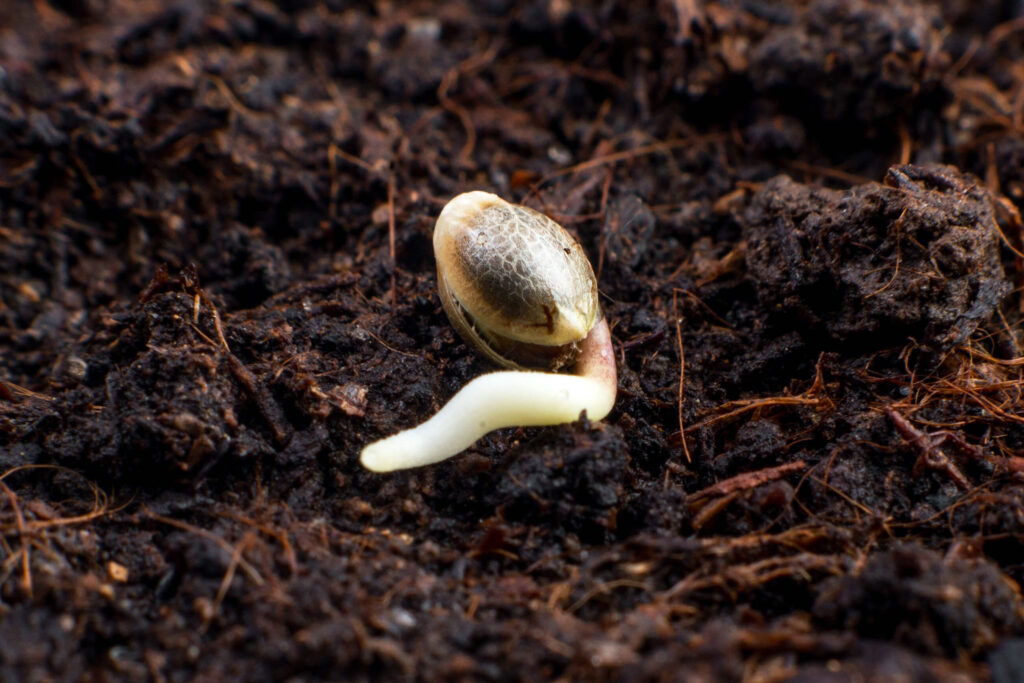
Starting cannabis plants indoors is always a good idea. This allows you to keep a close eye on them during their most vulnerable time and gives you a chance to see which of your plants are the most likely to grow into proper trees.
At this point, it’s worth pointing out that cannabis plants start flowering when they start getting less than 12 hours of sunlight each day; at least indoors. Outdoors, things get more complicated as the length of sunshine changes every day. While the 12-hour mark (the Autumnal Equinox) happens at the end of September, cannabis plants should already be well into flowering by this point, with an October harvest being fairly normal.
If you want to harvest in mid-October, and you expect a 12-week flowering time, then you’ll want to have your plants in the ground no later than early June. This means getting them started in early May to give you enough time to prepare them properly. I’ll explain more about this topic in Point 6 below.
The ideal schedule for growing outdoors varies wildly from one region to another. It’s always wise to consult with other growers in your area or at least to check things like Farmer’s Almanacs for general guidelines in your area.
Related post

5. Feeding & watering
Massive outdoor weed plants need A LOT of water. Exactly how much is an incredibly complicated question that you can find more detail on in our complete watering guide. However, there are some things that we can quickly estimate. Let’s take the 1000 litres of soil I mentioned above as a starting point.
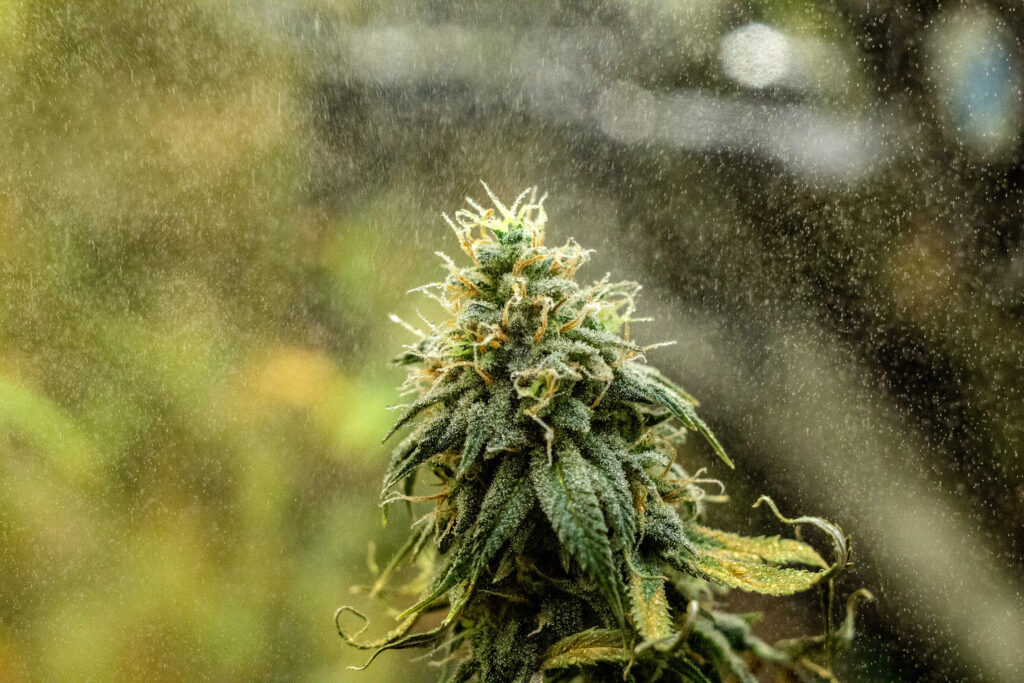
Commonly, a good rule of thumb is that you should use ¼ to ⅓ the volume of water as you have substrate in your pot. This number varies a great deal based on the specific composition of your soil, your drainage, and the environment, but it’s a good place to start. That means that a single 3-metre-tall weed tree in a 1000-litre pot would require anywhere from 250-330 litres of water per feeding—that’s about as much as a standard bathtub.
These plants will require an equally large amount of nutrients to thrive. For that reason, most growers looking to get their weed plants this big make their own fertilisers at home. This is an easy and cost-effective process.
6. Training
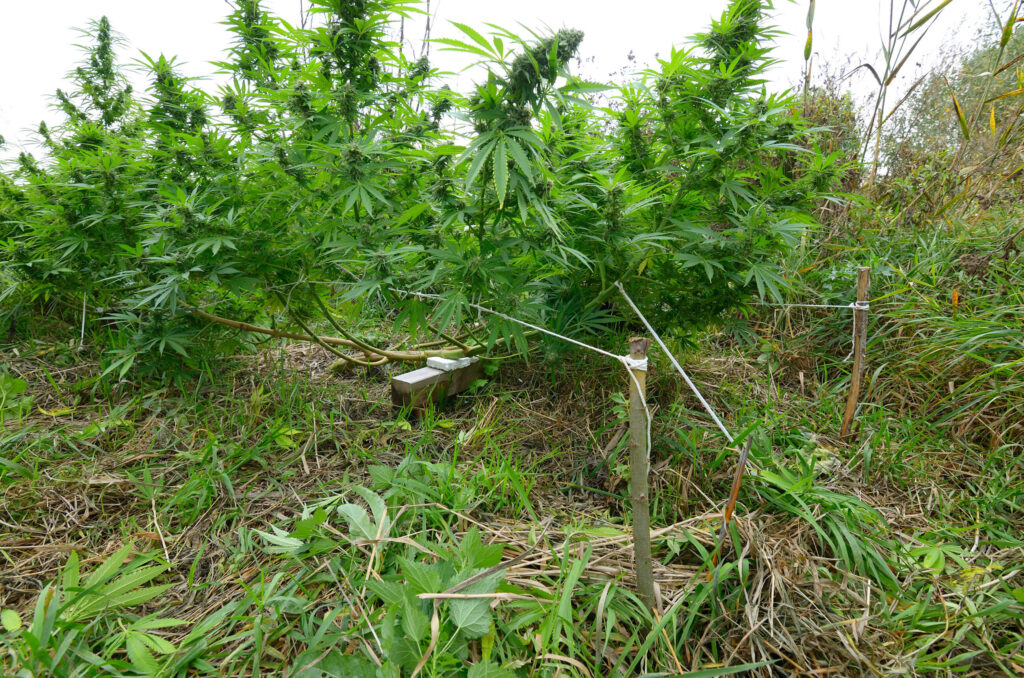
As I mentioned earlier, you’re going to want to give your plants a good 4-6 weeks to properly develop before they hit flowering. This is because you’ll need to do some fairly intense training to get a cannabis plant to grow into a true tree. Things like low-stress training, fimming, topping, and mainlining are all good ideas for most growers, but for true farmers, a combination of them all is best.
These techniques can be difficult and they are highly stressful on the plant. Taking the time to do them properly will ensure that your plants have the best chances of not only surviving but thriving.
Related post

7. Monster cropping
While everything I’ve talked about so far is important, there’s one technique that puts them all to shame: monster cropping. This is a fairly straightforward practice that I outline in full in my Monster Cropping Guide but the short version is that it requires taking clones of flowering plants and forcing them back into vegetative growth.
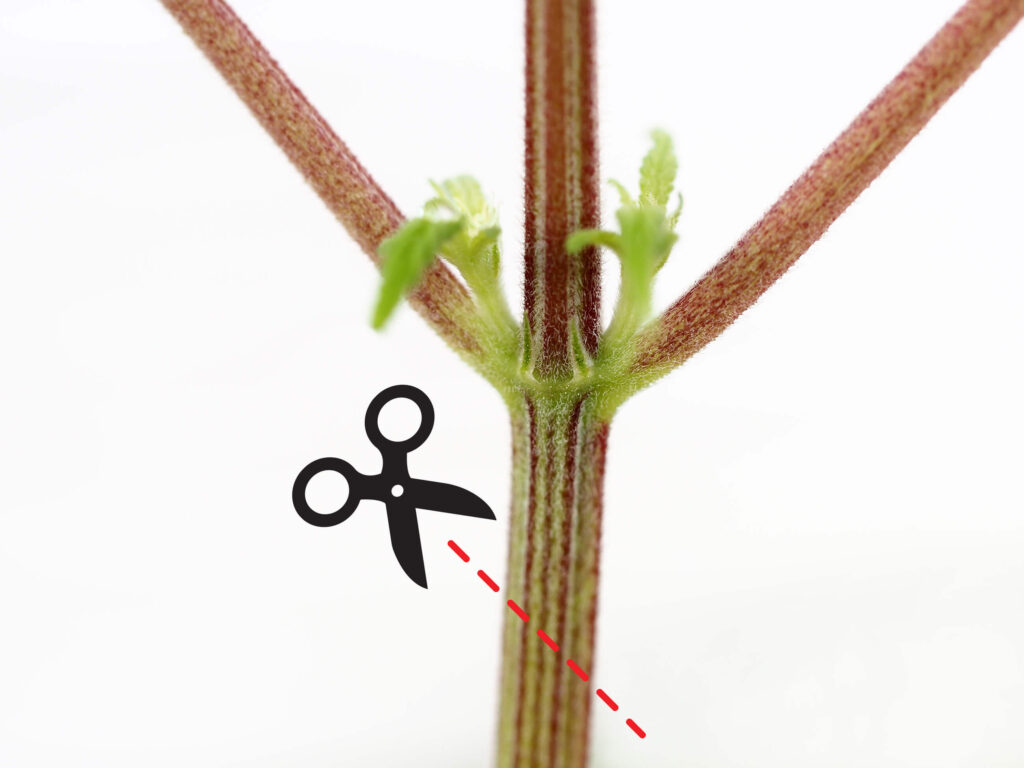
These re-vegged clones need more time than normal clones; at least an extra week to take root and an extra 2-3 weeks to revert the vegetative state. Once this is done, though, the growth of these new plants is truly remarkable. While cannabis plants tend to grow a main stalk that shoots straight up, re-vegged clones turn into massive bushes with potentially dozens of main branches, each of which can have its own cola.
Monster cropping might not be for everyone, and the extra time and risks are worth keeping in mind. However, if you’ve got the space, time, and dedication, this is a surefire way to produce the biggest plants you’ve ever grown.
What’s the biggest strain you’ve ever grown, and how tall was it? Share below!
