


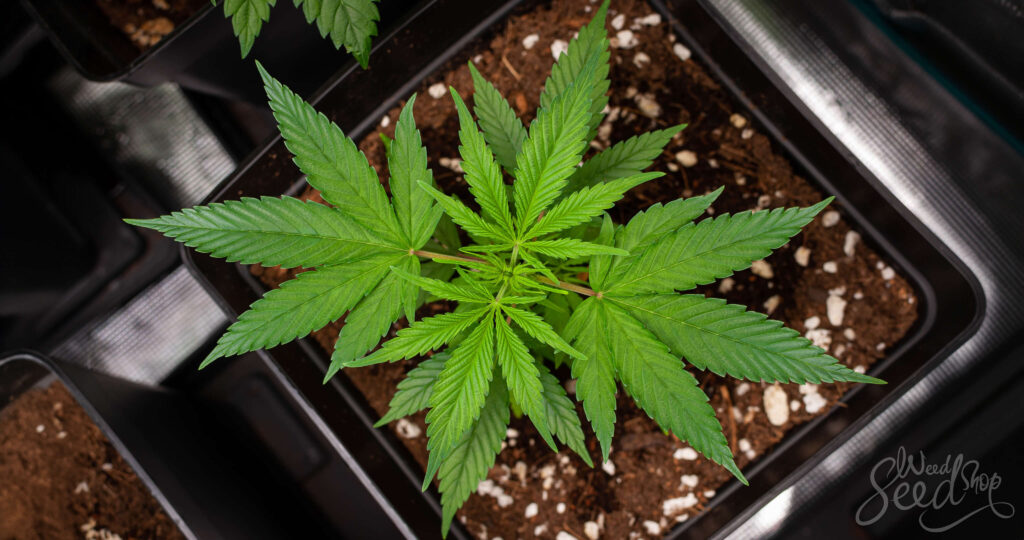
The vegetative stage of a cannabis plant is perhaps the most challenging phase of a plant’s lifecycle. While you’re not dealing with the fragility of seedlings or the high stakes of flowering, the work you put in at this phase can make or break any grow.
- What is the vegetative stage?
- How long does the vegetative stage last?
- How to care for vegetating cannabis plants
- What environment is ideal for vegetating plants?
- How much light do vegetating plants need?
- How do I feed vegetating cannabis plants?
- How should I water plants in the vegetative stage?
- How often do I need to water vegetating plants?
- How much water do cannabis plants need?
- What’s the best time to water plants?
- Topping vegetating cannabis plants
- Pruning vegetating cannabis plants
- Advanced techniques for vegetating plants
- Transitioning cannabis plants to flowering
What is the vegetative stage?
In short, this is the phase where the plant does much of its growing. While growth will continue well into the flowering stage, the final size and shape of a plant are determined during vegetation. During this phase, roots expand rapidly, the plant will grow noticeably larger every day, and you may even begin to notice a distinctive smell coming from your grow room.
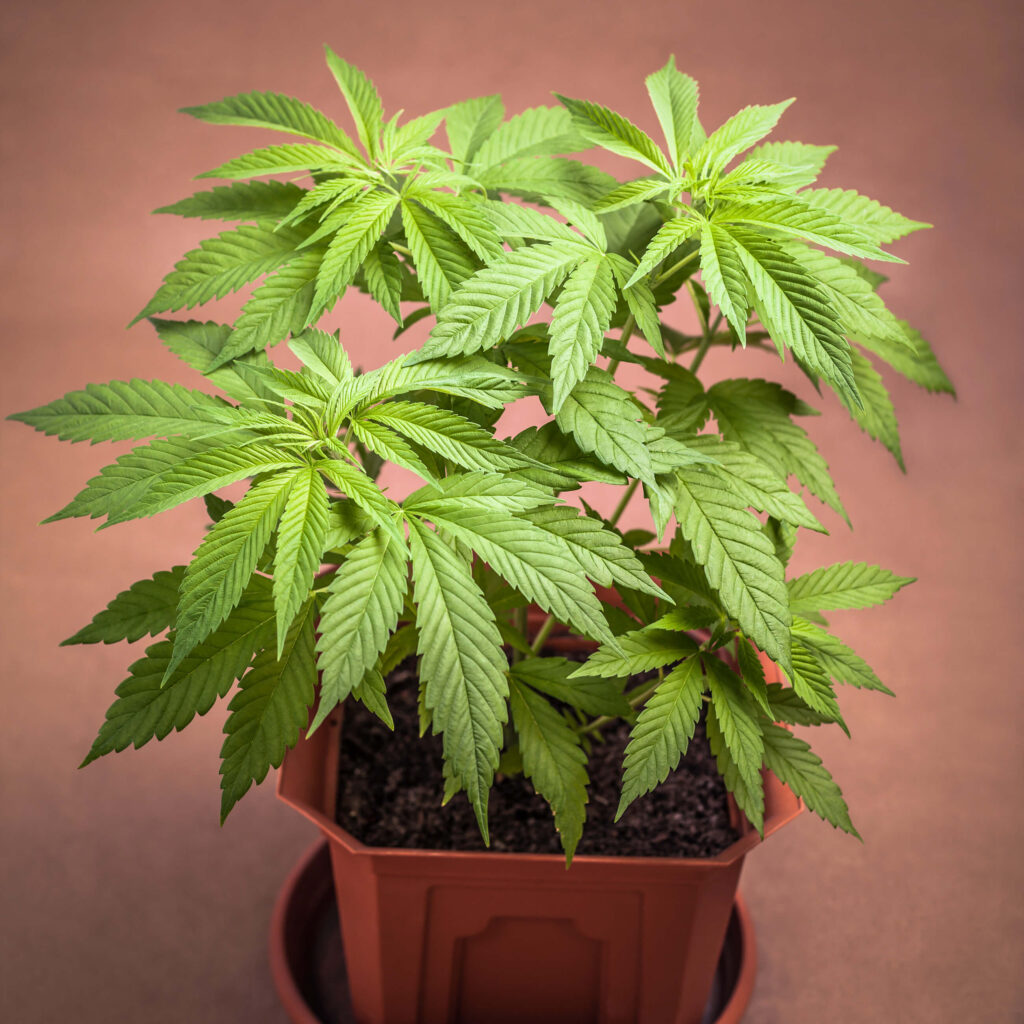
Proper care and maintenance during vegetation is crucial for a successful harvest. By giving your plants the space and care they need, you can ensure a robust frame to maximise your yields.
How long does the vegetative stage last?
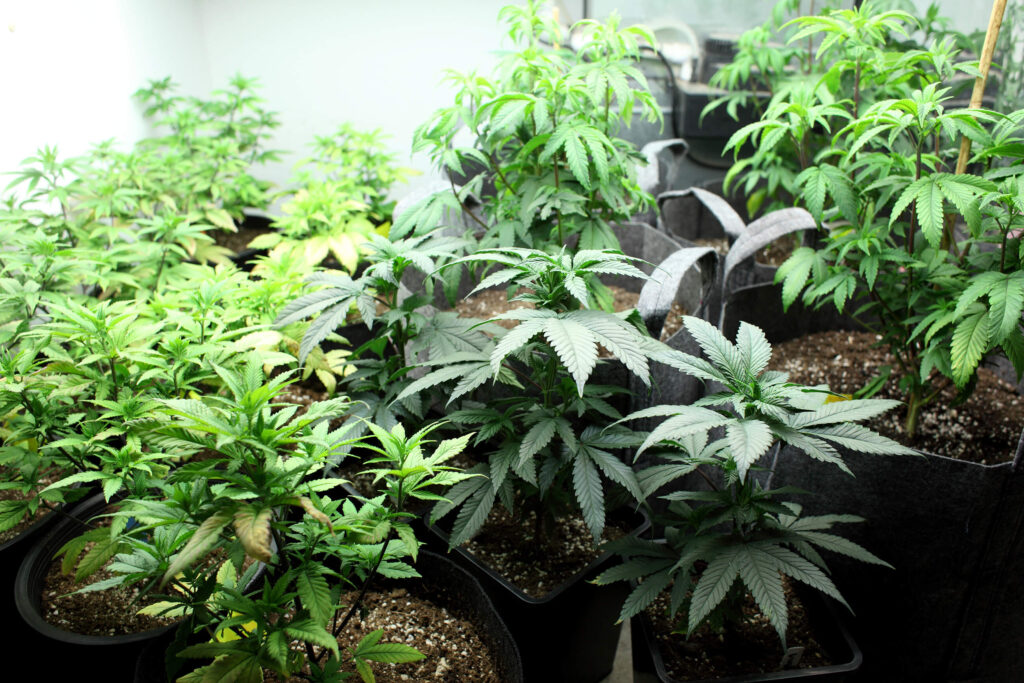
Vegetative stage indoors
Most commonly, growers will let their plants veg for 3-16 weeks, however, there is no set minimum time required or maximum time allowed. The only restrictions on your veg period are your time and your grow space. A shorter vegetating period will mean a faster harvest but will come at the expense of yield. Most growers need to experiment with a few harvests before they find what schedule works best for them.
Many SoG growers opt to shorten the vegetating time as much as possible. Commonly, those going for a Sea of Green approach want to keep their plants short and even, preferring rapid turnaround to massive single-plant yields. In this case, vegging for 4-6 weeks (or until the plants are roughly 25-30 cm tall) is common, though some growers cut that down even further to only 2-3 weeks of vegetation (flowering the plants at a height of only 15 cm or so).
On the other hand, if you’re interested in mainlining or monster cropping (more on those later), you’ll likely be vegetating your plant for 12-16 weeks if not possibly longer. This extra time will allow your plant to produce significantly more flowers in exchange for your patience.
The single most important factor in how long to veg your plants, though, is your desired final size. Plants routinely double (and can even triple!) in height after the switch to flowering. Don’t wait until you’re nearly out of space before you start flowering. A plant that’s smaller than desired is annoying, but a plant that’s grown too big for its space might not even reach harvest.
Vegetative stage outdoors
Note that these schedules only apply if you’re growing inside. If you’re keeping your plants outdoors, then they will start flowering whenever the light schedule reaches a certain threshold. The exact time depends on the strain, so be sure to check your seeds’ optimal planting season to make sure that your plants are large and healthy enough to enter the flowering stage when the time comes.
A note for autoflowering plants
Autoflowering plants do not respond to changes in light schedules and will flower when according to their schedule regardless of how much light they get. Overall, the vegetative phase of these plants lasts only a few weeks.
Related post
How to care for vegetating cannabis plants
The vegetation phase of your plants is the most forgiving. Most of the mistakes that are made here can be overcome with a little extra time and work, but avoiding problems in the first place is always better. By giving your plants a healthy environment, you can reduce the likelihood of problems happening in the first place.
What environment is ideal for vegetating plants?
While there are a thousand tiny things that go into a healthy grow space, there are four factors that stand out above the rest: temperature, humidity, airflow, and pH. Keeping these four things in balance will get you 90% of the way to the perfect setup.
Temperature
The ideal temperature for cannabis plants in the vegetative stage is roughly 20-30°C. Different strains like it a little bit warmer or cooler than others, but this range will work for almost every plant out there. Note that these are “daytime” temperatures (when the light is on), nighttime temperatures can safely fall about 5° C lower than your daytime average.
Generally, higher temperatures will cause the plants to grow faster, making them taller and lankier. While that might sound nice, these skinny stems and branches aren’t strong enough to hold large flowers and this is likely to reduce yields. On the other hand, lower temperatures can cause a plant to grow more slowly and decrease its resilience to certain diseases.
Even 1 or 2 days outside of the ideal range can cause lasting damage to your plants, so keeping the temperature under control is one of the most important variables to maintain.
Humidity
Humidity during vegetation should be roughly 45-60%; that’s lower than the seedling stage but higher than the flowering phase. This means that, unlike temperature, you’ll need to continually adjust the humidity throughout the stages of your grow.
Humidity above 60% risks causing mould, fungus, or algae (in a hydro setup) to take hold. Once this happens, removing it can be almost impossible without serious damage to the plants. Too low humidity risks causing the plants to dry out and become crisp and brittle. Like all things, balance is the key.
Many growers use both humidifiers and dehumidifiers to maintain the optimal range. If you’re in a particularly arid or humid location, though, you’ll likely only need one of these.
Airflow
External ventilation is crucial for removing stale, damp air and (if paired with a carbon filter) keeping the smell isolated to the grow space. Without a way to flow out of your space, the air inside will quickly become too hot and damp to sustain your plants and the risks of mould skyrocket.
But ventilation isn’t all that’s needed. Strong internal airflow is just as important to the well-being of your plants. By placing a good oscillating fan inside of your grow space, you can reduce the risk of mould or fungus taking hold by keeping the upper layer of soil dry. Additionally, you reduce the prevalence of small insects that struggle to move in rapidly moving air.
Most importantly, though, you give your plants something of a workout. Much like animal muscles, plants require a degree of stress to grow big and strong. By providing your plants with a constant source of wind to work against, you encourage thicker stems and branches that will be able to support far larger flowers down the road.
pH levels
The unsung hero of cannabis growers, keeping your pH levels in the 6.2-6.7 range will make sure that your plants can uptake all the necessary nutrients you’re giving them. A pH that is too acidic (lower numbers) can damage the roots, stunt growth, and cause severe damage to the plant. Likewise, s growing medium that is too alkaline (higher numbers) can prevent the plant from taking up nutrients.
Monitoring your pH levels should be done regularly. Before each feeding/watering, you should check your soil pH as well as the pH of the water you’re adding. After an hour or so, check your soil pH again to make sure it’s still in range.
Related post
How much light do vegetating plants need?
The age-old question for any grower is; “How much light do I need?” Well, the answer to that is complicated, to say the least, but there are several things that you need to keep in mind when picking the right light.
Power
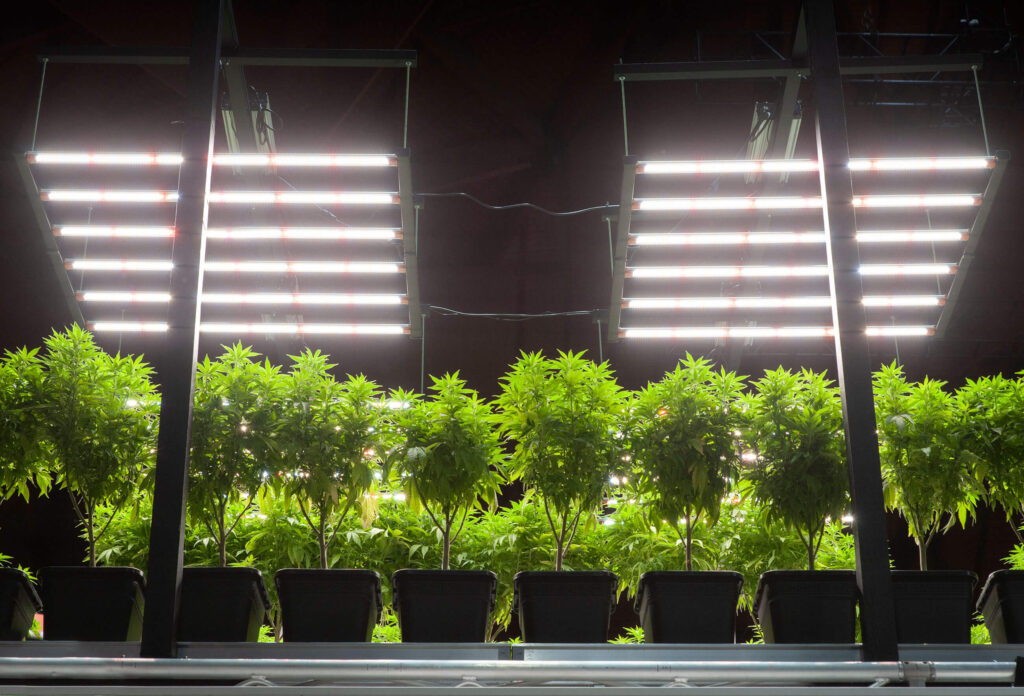
The single most important factor in a light is how much output it creates. Traditionally, this is expressed in terms of watts, however, that measurement is becoming less reliable. With traditional metal halide (MH) and high-pressure sodium (HPS) lights, the amount of power that went in was the sole factor in how much light came out. While there is still some truth to that, modern LEDs have cut the power requirements drastically.
The amount of light that you need is largely dictated by the area that you’re growing in. For example, if you’re growing in a 1.5 m2 area, you should aim for roughly 400 W of lighting. Now, again, this number can be misleading. If you’re using an LED, you can get away with a 200 W light, as these are far more efficient.
This confusion is a large reason why many manufacturers are moving away from advertising pure wattage and are instead focusing on metrics like PPFD (Photosynthetic Photon Flux Density) which is measured in micromols per square meter per second (μmol/m²/s). This number is a measurement of how much light hits a certain area over a certain time. Generally, plants in the vegetative stage need roughly 400-600 μmol/m²/s.
Spectrum
Not all lights are equal—even if they have all the same numbers, two lights might put out very different light. That’s because there isn’t just one kind of light, it comes on a spectrum. Generally speaking, vegetating plants prefer bluer light while those in the flowering stage do best under redder light.
Historically, this meant that many growers had two lights; an MH light (these emit blue light) for the vegetative phase and an HPS (red light) for flowering. However, most LEDs made these days offer a so-called “full spectrum” meaning that they can be used during the entire grow. Some even come with a switch allowing you to choose a bluer or redder light, though these often emit less light overall as each setting uses only a fraction of the LEDs on the light.
Schedule
This is the big one and the single thing that keeps your vegetating plants from switching to flowering. While some growers leave their lights on for 24 hours straight, this isn’t strictly necessary—and may even be detrimental.
While the general rule is that plants can’t get enough light (nothing you put into your grow room will ever match the sun), that isn’t technically accurate. Light stress is a thing that can happen to plants under extreme circumstances. To minimise this risk, it’s not a bad idea to turn your lights off for about 6 hours a day. This 18/6 schedule will give your plants time to rest and recover at the end of a long day as well as save you considerable money on your power bill.
Related post

How do I feed vegetating cannabis plants?
This is a major choice that every grower needs to make at the start of their grow: what kind of nutrients do I use? In broad terms, these can come in either liquid or powder form and both are added to the water before watering.
Adding nutrients to water is incredibly simple and there isn’t any real need to think too much about it. Just follow the instructions listed on the package as accurately as you can. The manufacturers have done the research for you. Trust me, it really is best to just follow these directions.
What if my soil has nutrients in it?
Many potting soils come preloaded with nutrients and these are a great choice for many growers. If you’re using enriched soil, the package should contain information on how many nutrients are included and how long they should last. If you’re putting a fresh seedling into enriched soil, you shouldn’t need to add any new nutrients for the first 4-6 weeks.
How should I water plants in the vegetative stage?
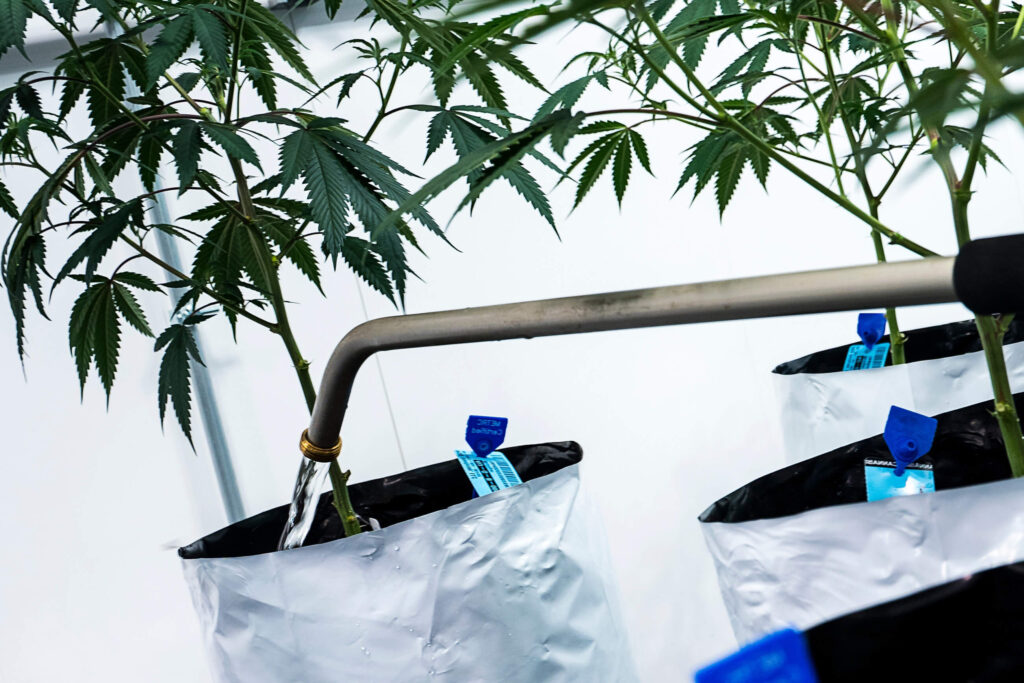
Watering plants is one of the easiest parts of growing them, but that doesn’t mean it’s without risks. Both underwatering and overwatering your plants can quickly cause lasting damage and, in a worst-case scenario, outright kill them.
When watering your plants, be sure to avoid pouring the water directly onto the plant itself. The nutrients in the water are largely salts and any water that splashes onto the leaves will dry and leave these salts behind. This can cause permanent damage to the leaves or stems. Additionally, don’t pour the water directly at the base of the plant as this can create the perfect habitat for infestations.
How often do I need to water vegetating plants?
There’s no one answer to this. Factors including your lights, fans, ambient temperature, size of pots, size of plants, and so many more all contribute to how often you’ll need to water vegetating plants. As a general rule, you should add more water when the top 2 cm of soil has dried out. Stick a finer in the dirt up to your first knuckle, if it feels dry, you need to add water.
When your plants are first placed into their pots, they won’t be using much water so you should only need to water them once or twice a week (though this depends on the size of the pot they’re in). As your plants grow, you’ll likely need to water more frequently.
How much water do cannabis plants need?
Enough, but not too much. That might not sound like much of an answer, but it’s the only one that is universally true. While a seedling in a plastic cup can get by with 100 ml of water a day, a 2-meter-tall plant in the middle of flowering can drink several litres in 24 hours.
During the vegetative phase, most plants will need a few litres a week spread out over multiple waterings. While underwatering is harmful to the plant, overwatering can be downright deadly. If you’re unsure about how much to use, start with less and add more if needed.
What’s the best time to water plants?
The best time to water cannabis plants is right after the lights turn on (or the sun comes up if you’re growing outdoors). This will help the plant stay hydrated throughout the day and the extra heat will help keep the topsoil dry. Remember, you want your soil to be damp, NOT wet.
Related post
Topping vegetating cannabis plants
Topping your plants is a fairly simple way of increasing your yields at the cost of slowing your grow. There are countless techniques and strategies, but the basic principle is always the same. By removing the top of a plant, you cause the branches immediately beneath it to become main stalks. This means that instead of one cola, you can grow 2 per plant.
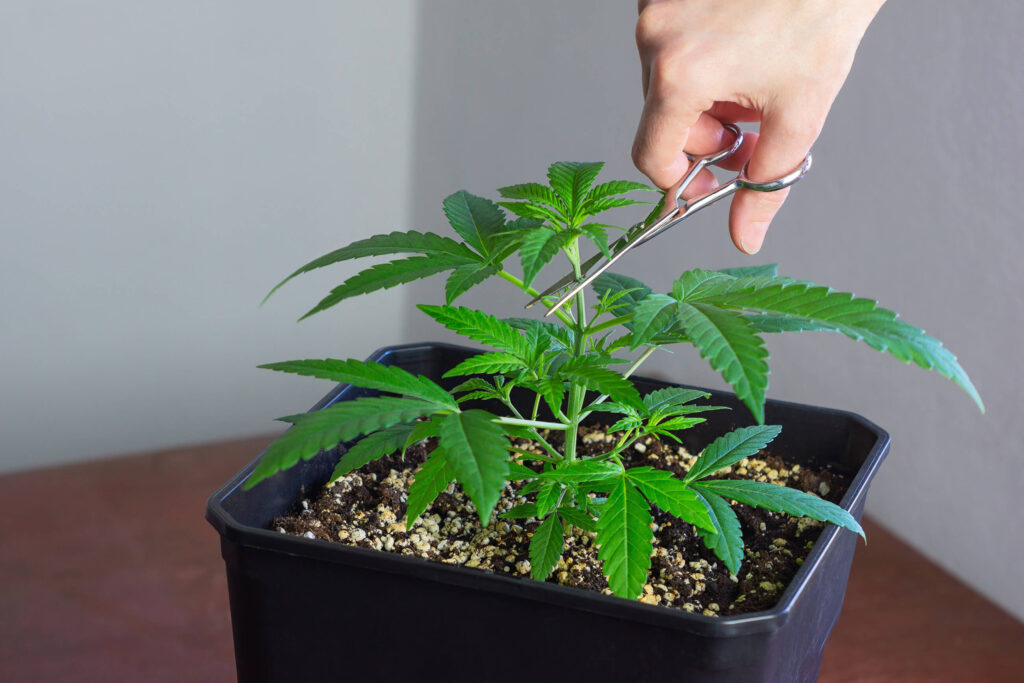
Topping should be done quite early in the vegetative phase. Ideally, sometime between the third and fifth set of branches. Simply cut the plant off just above a pair of branches, and give it a few days. Soon, you’ll notice the uppermost branches begin to thicken and grow outwards. Each of these will now turn into its own main stem.
Pruning vegetating cannabis plants
Over the next several weeks, your plants will see an explosion of growth with the plants growing noticeably larger every day. Soon, you’ll realise that you need to trim some of these leaves back, or may even top the plant entirely.
Why do I need to prune vegetating plants?
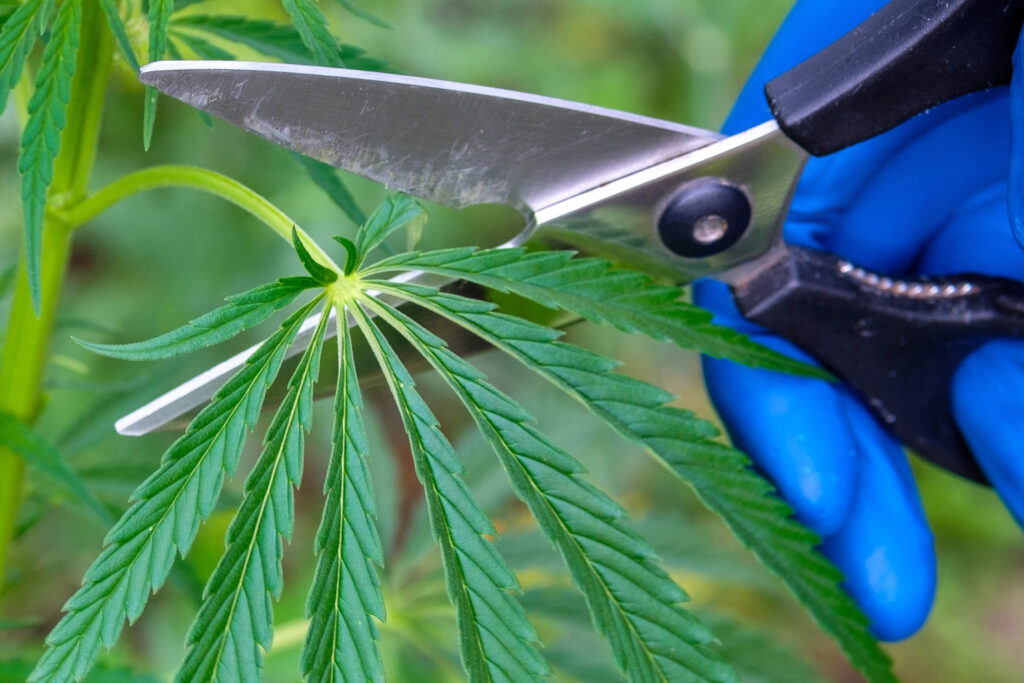
While removing leaves from a plant might seem counterintuitive, pruning has several benefits that will help you maximise your plants’ potential.
Light penetration
If a leaf isn’t getting light, it isn’t helping the plant grow and is only draining resources. If you’re only using overhead lighting, only the uppermost leaves will get any light. Generally speaking, only the top 3-5 layers of leaves will get any usable light, and that number is less if you’re using LEDs. By removing the lowest leaves, you allow the plant to focus its energy on growing instead of keeping these unproductive parts alive.
Airflow
As mentioned above, keeping good airflow will help protect your plant against things like mould. By removing leaves that are too close to the main stem, you can increase airflow and keep your plants safe.
When should I prune my plants?
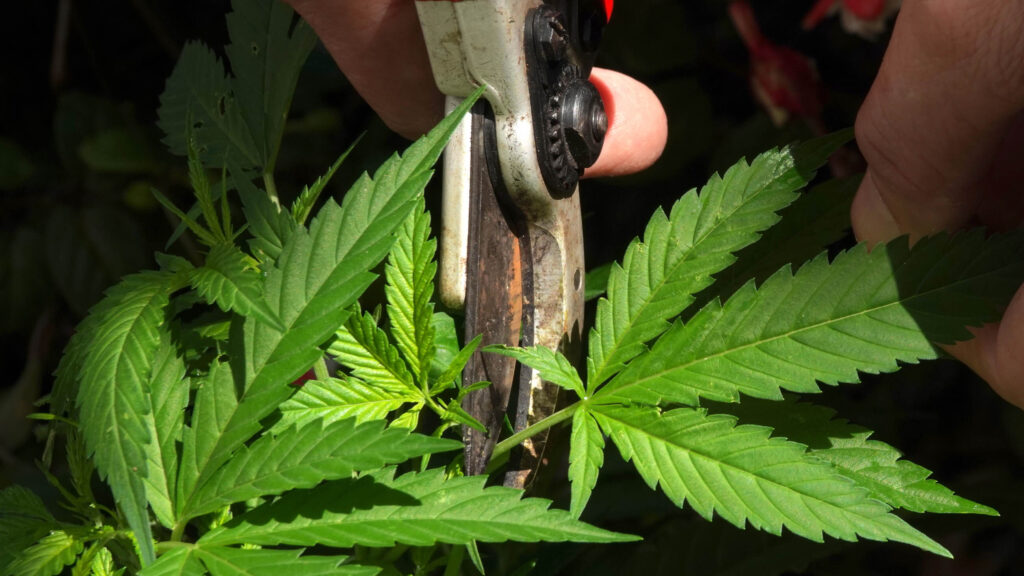
Pruning is an imperfect science and the exact time and degree that any plant will need varies greatly. Once you notice that leaves aren’t getting light or aren’t moving in the breeze, it’s likely time to start cutting leaves away.
When pruning your plants, you’re going to feel like you’re taking too much off—that’s normal. Once the plant starts flowering, pruning isn’t advised, so don’t be afraid to “overdo” it a bit here. As I stated earlier, your plant will double or triple in height after you start flowering, so don’t be scared to go a little crazy with it. Just be sure to leave the top 2-4 layers of leaves alone.
Advanced techniques for vegetating plants

Sure, you can just let a plant grow for a few weeks, do some pruning, and switch it to flowering without any extra hassle. However, many growers quickly want to start pushing their plants to the limit to see just how much each one can produce. If you’ve got the time, patience, and know-how, you can easily double (or more) your per-plant yield.
Low-Stress Training
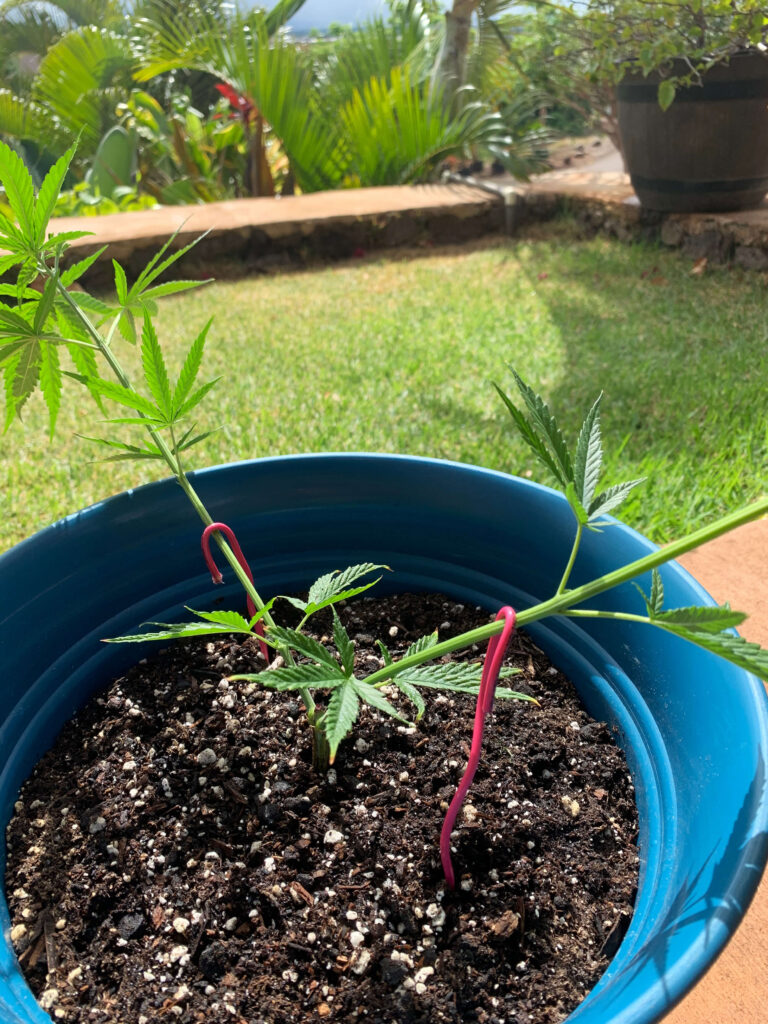
Low-stress training (LST) is perhaps the easiest and most common technique used by growers to get a little more out of their plants. In short, the idea is to “train” your plants by slowly bending them over and tying them down. This allows for plants to grow larger in a smaller space. Read our full guide on LST to learn how to get started for yourself.
Mainlining
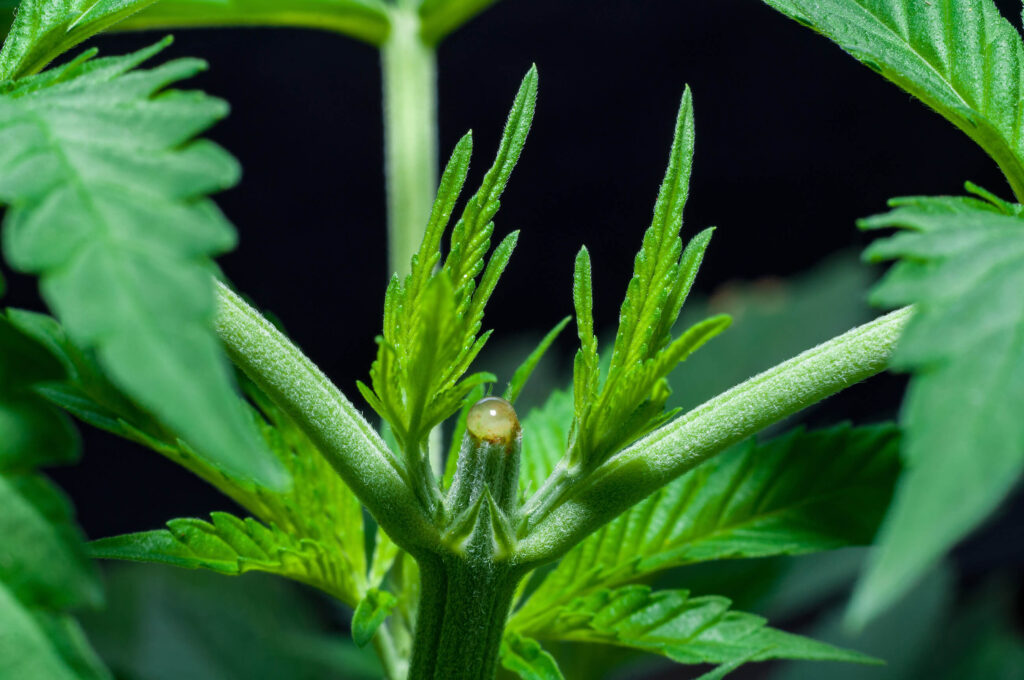
One of the most time-consuming practices, mainlining is perhaps the most extreme form of training. By topping your plant early and often, you can use LST to turn a single plant into (effectively) 4, 8, 16, or more. If you’re willing to spend 16-20 weeks vegetating a single plant, you can learn all about mainlining in our guide.
Lollipoppoing
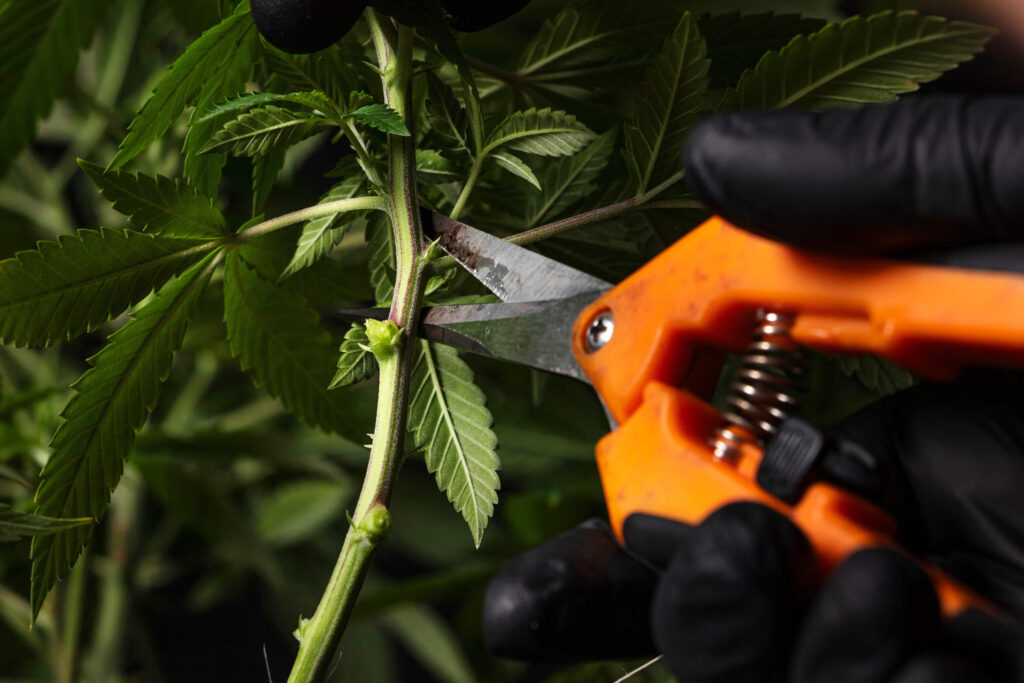
Lollipopping is basically the most extreme form of pruning. By removing all lower branches, you leave only enough flowering sites for a single massive cola. When combined with topping, you can increase the size of your buds dramatically. If that sounds good to you, check out our guide to lollipopping.
Transitioning cannabis plants to flowering
The transition to flowering is one of the simplest parts of any grow. All you need to do is switch your lights to a 12/12 cycle (12 hours on and 12 hours off) and adjust your nutrient levels. When is the best time to switch? Well, that’s ultimately up to you and how much space and time you can commit to the grow.
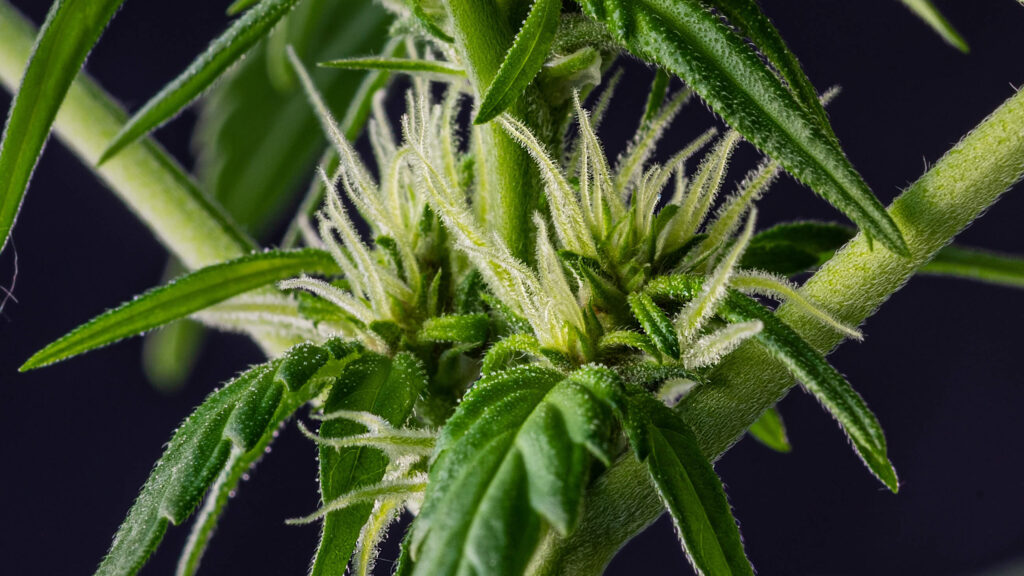
However, there are signs that your plant is ready to make the switch. This period, known as pre-flowering, typically occurs after 6-8 weeks in most strains and is characterised by a few physiological changes in the plant.
Signs of pre-flowering in cannabis plants
The first thing to keep an eye out for is the formation of small structures called stipules. These resemble new leaves and grow at the base of the branches. These will continue to grow into pre-flowers and can be used as a preliminary guide to sexing the plant if you’re not using feminized seeds. Likewise, some strains may change the shape of new leaves to become narrower and more pointed, though this isn’t always the case.
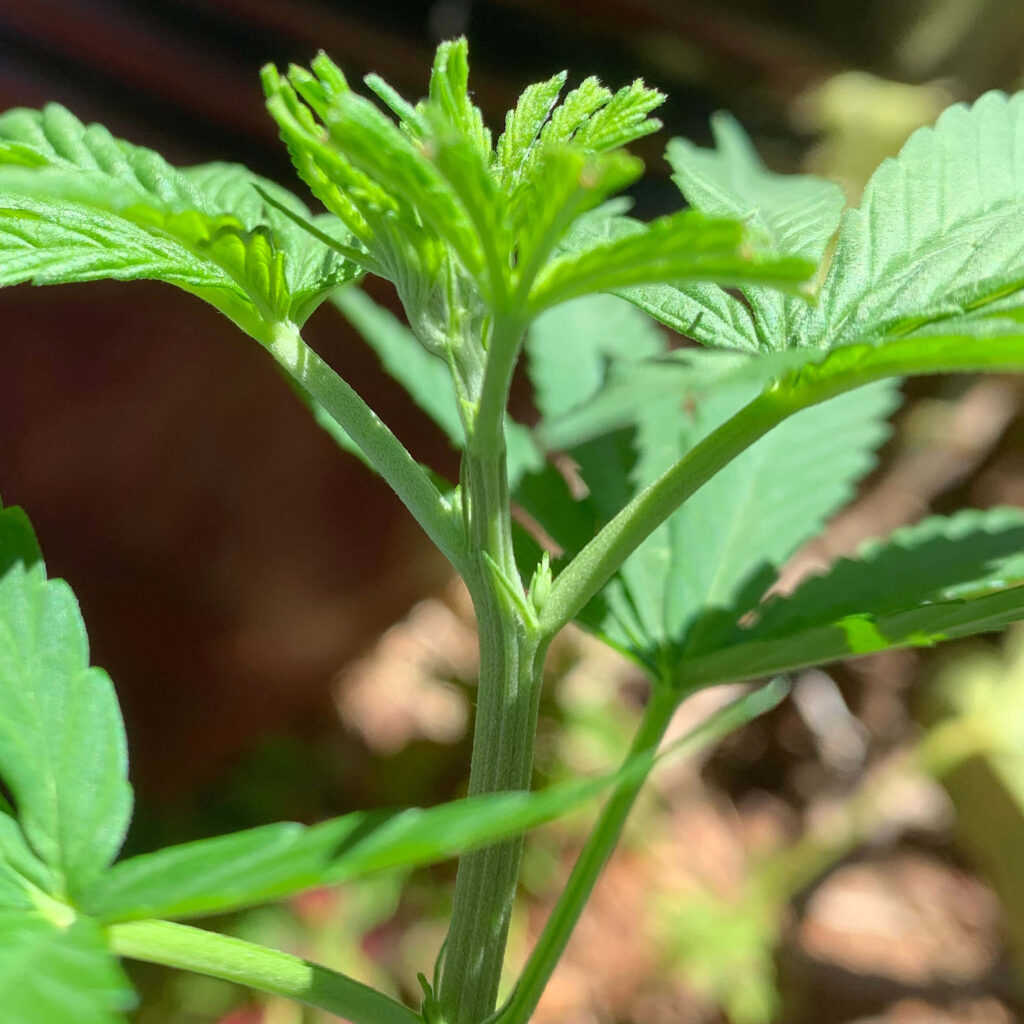
Now, you’re not beholden to the plant’s schedule (unless it’s an autoflower), so you can absolutely make the switch earlier or later depending on your schedule and desired outcome.
