


If you feel like you’ve mastered the basics of growing, then it might be time to consider super cropping. This advanced technique comes with a few risks, but many growers find the reward more than worth it. With just a few basic tips, anyone can get started and up their yields.
What is super cropping?
Super cropping (also written as “supercropping”) is one of the more advanced growing techniques out there. This incredibly high-stress training (HST) method involves bending your cannabis plants just to the point of breaking. Much like how a broken bone regrows to be even stronger, weed plants that are heavily damaged can bounce back to be bigger and better than ever.
Super cropping can deliver some of the biggest yields many growers have ever seen, but it’s not without risks. Inexperienced growers can quickly find themselves destroying their perfectly healthy cannabis plants if they’re not careful. Thankfully, with the right know-how and a bit of patience, anyone can up their yields with this technique.
What are the benefits of super cropping?
While the idea of intentionally damaging your healthy plant might seem counterintuitive, there’s some very good science behind the idea. In nature, when a weed plant is attacked or damaged, it responds by uptaking more nutrients than usual. This fuels a burst of growth at the damaged area resulting in an even stronger branch that can support even more weight.
What’s more, damaged female weed plants use this extra energy to produce more trichomes—the little white crystals that hold the THC. By super cropping at the right time, you can encourage your plant to grow bigger and produce higher-potency buds.
Related post
How to super crop weed
Super cropping a cannabis plant is fairly simple, but requires great care and a delicate touch. The line between not doing enough damage and doing too much is razor-thin so make sure that you’re paying attention.
What do I need for super cropping?
As with any task, make sure that you have everything you need on hand before you get started. Luckily, super cropping doesn’t require much all you need are:
- Latex gloves (always a good idea when working on your plants)
- Garden ties
- Wooden dowels
- Duct tape (for if you mess up)
- Knowledge and experience
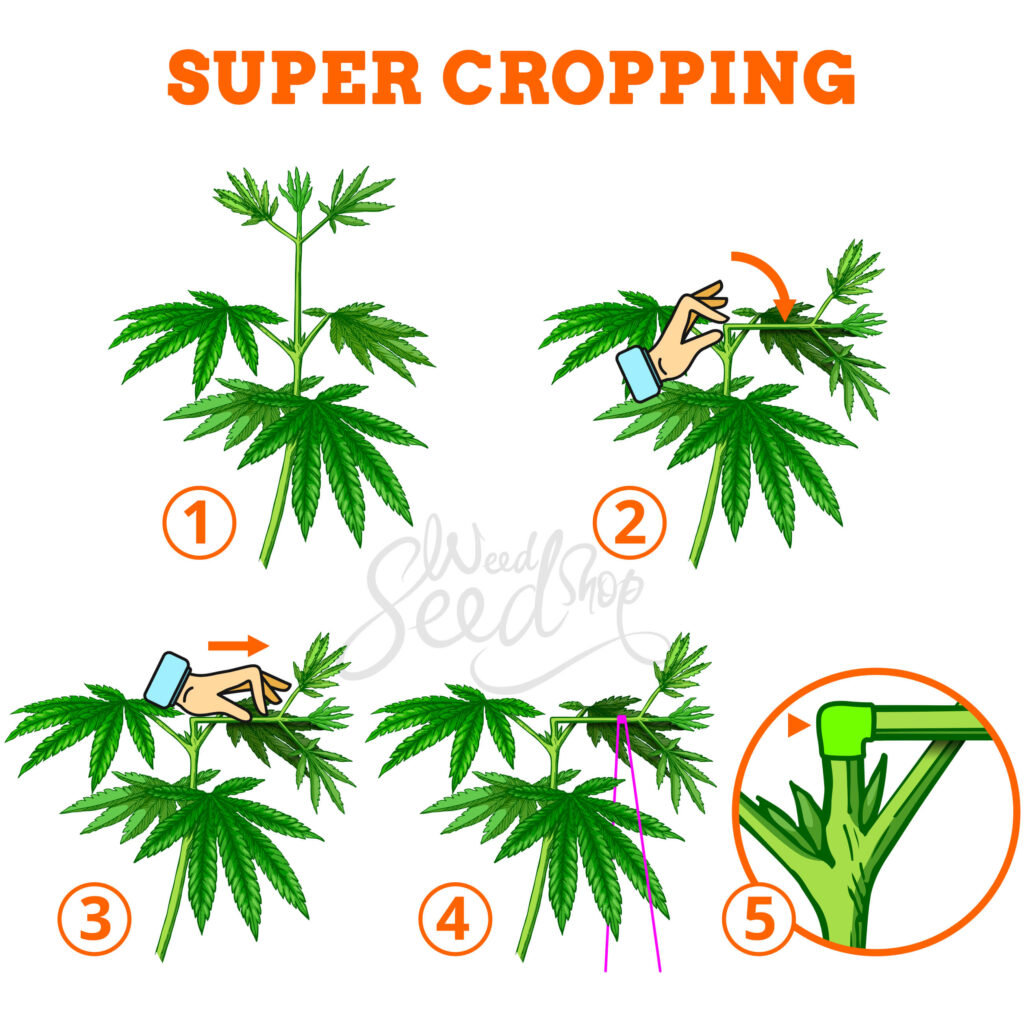
Step 1: Select a branch
Once you start supercropping there’s no going back, so make sure that you select the sites carefully. The ideal branches are fully mature, but not yet stiff or woody—they should bend but not snap. If any of your branches are noticeably taller than the rest, these often make a good choice as lowering them will create a more even canopy.
Step 2: Select a point to crop
Now that you’ve selected a branch, it’s time to get to work. Select the point at which you want the plant to bend. If your cannabis plant has only a single cola, then you’ll want to use the greener, more pliable growth in the upper half of the plant. If your plant has multiple colas, then you‘ll need to select points at the same height for each. The idea is the create as flat of a canopy as possible.
Step 3: Gently pinch and bend
This is where the magic happens—and where the risks lie. The goal here is to damage the internal structure of the plant while keeping the external structure intact. To do this, it’s important to be gentle.
- Grab the branch between your thumb and index finger. Squeeze it gently until you begin to feel a small amount of give. Don’t overdo this.
- While keeping pressure on the point you’re holding, slowly roll the branch between your fingers and wiggle it slightly. Do this for 5-10 seconds until the plant is malleable. On older cannabis plants, this process may require up to a minute. Do not force it! Take your time.
- Depending on the size of the branch, this process can be repeated at multiple points. Starting from where you first pinched, move a few cm up and repeat the process. It’s best to avoid moving past the third node from the tip, though.
Step 4: Tie the branch down
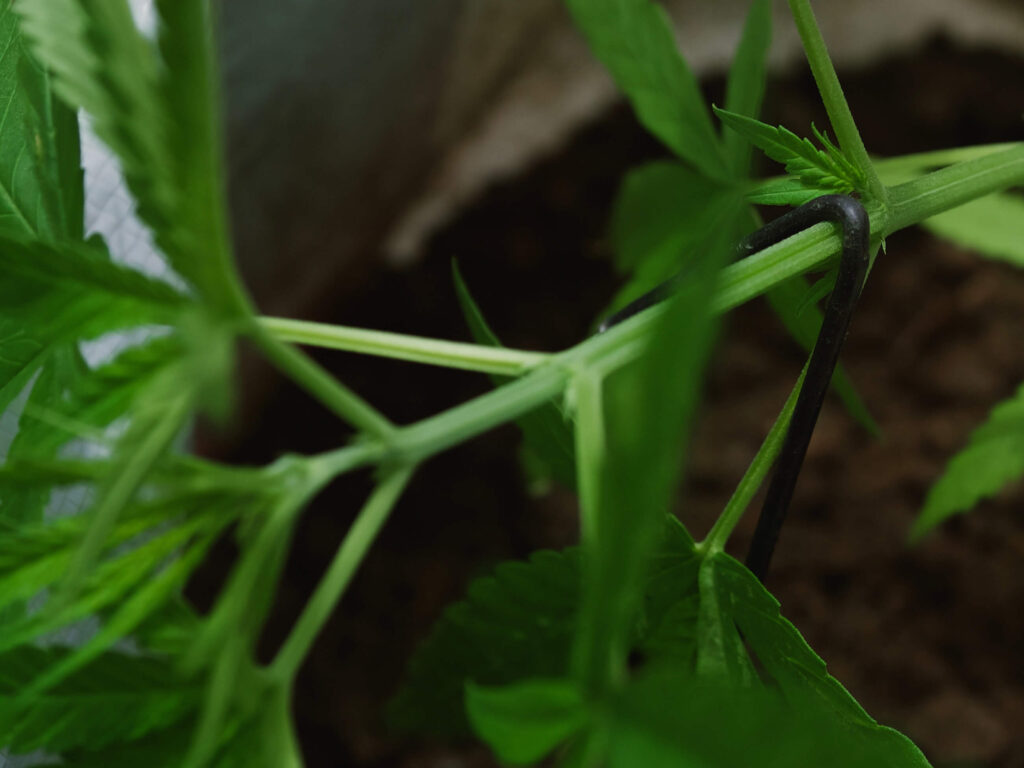
Cannabis plants naturally grow towards the light so use some garden ties to keep the branch at a 90° angle. Depending on the size of the branch, you may also need some wooden dowels to keep it propped up.
Step 5: Wait
After a few days, the bent branches will begin to stiffen into large, hard knots. These will support a tremendous amount of weight allowing you to push your plants to even larger sizes and increasing the yield of your harvest.
Related post

How to fix broken branches
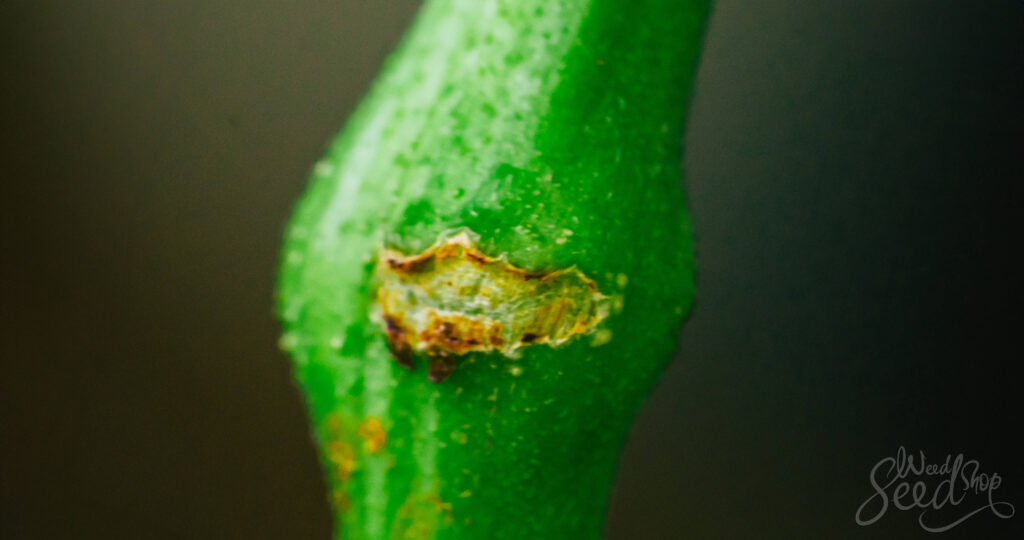
If you’re new to super cropping (or just unlucky) you very well may find yourself snapping a few branches. A branch is considered “broken” when it snaps and can no longer support its own weight. If it’s falling over past 90°, it’s probably broken. If you can see an open slit or crack in the outer stem, the plant is definitely broken.
While this is unfortunate, it’s not the end of the world and that branch can still be saved. Luckily, fixing a snapped branch is easy and a broken branch can still produce quality flowers at the end of the harvest.
In the event of a snapped branch, the best course of action really is the simplest one—just take it up. Take some duct tape (this is a good choice since it “breathes” better than many other tapes) and wrap up the snapped area. Don’t go overboard as you’ll be taking it off in a few days, but the cannabis plant should be able to support its weight with the tape alone.
It’s also important to tie down even broken branches as they can (and likely will) grow straight back up if left alone.
After 4-7 days, you should be able to safely remove the tape. Be gentle here as you don’t want to damage the plant any further. Avoid using anything sharp and take your time to slowly and carefully peel the tape off of the plant.
When to super crop cannabis plants
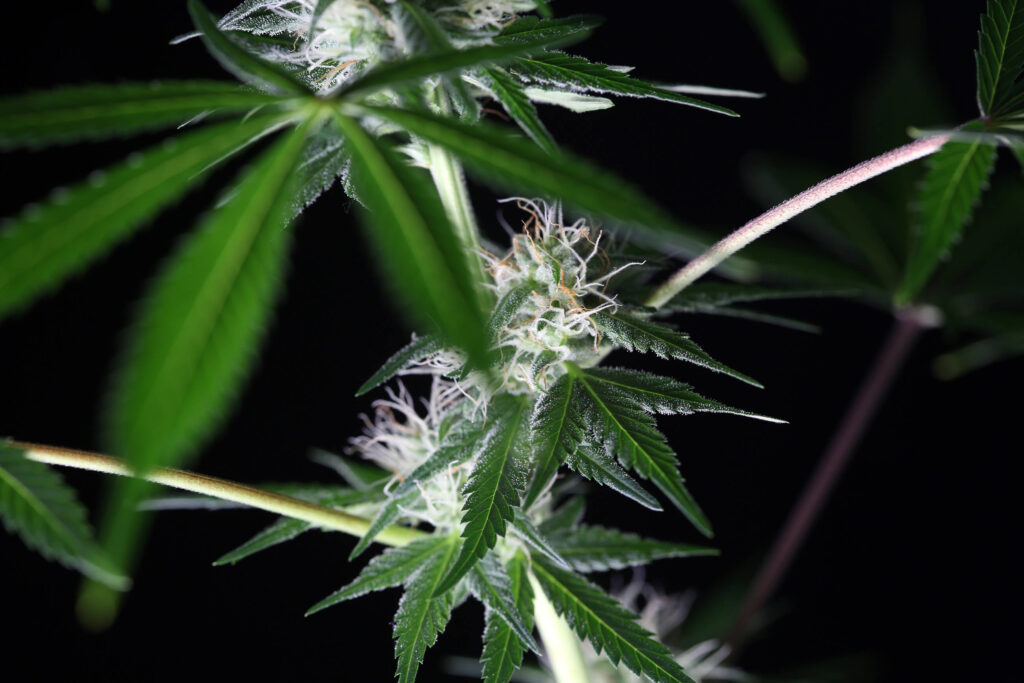
If you’re just getting started with super cropping, then it’s best to wait until your plants have matured to the point where they can survive a broken branch or two. Usually, this is later in the flowering stage, about a week before you flip them. This will make sure that they have enough time to recover before they switch to the next phase of growth.
If you’re combining super cropping with low-stress training (LST) or mainlining, then your vegetating period is going to be longer than usual (more than 4-6 weeks). In this case, you may want to super crop a few weeks before flowering. This combination of growing methods can produce incredibly large cannabis plants but takes time and commitment. Check out our guides on those techniques for more detailed information.
If you’re a bit more comfortable with the process (or are just feeling particularly bold) then it’s also a good idea to supercrop a second time about 10-14 days into flowering. During this time, plants are growing at their fastest rate and will recover from the stress quickly. This will also encourage the rapid growth of flowers and trichomes.
Remember to never attempt super cropping if a plant is dealing with any kind of infestation (fungal, mould, or insects). Super cropping is one of the most stressful things that a grower can do to a plant, and if it’s not already healthy, then the damage could be irreversible. It’s always better to wait a few more days (or even weeks if need be) than to try and rush things.
Related post

Can I super crop autoflowering plants?
Since autoflowering plants are fixed to a fairly specific schedule, supercropping them can be difficult, as it doesn’t leave them with a lot of time to recover from the stress. With a rather short vegetation period, autoflowering plants are typically ill-suited for many HST growing techniques.
However, if you’re experienced with supercropping and you know exactly how long your autoflowering plants will spend vegging, then it can be done. On the whole, though, most growers who are interested in super cropping prefer the ability to take their time and control when a plant flowers.
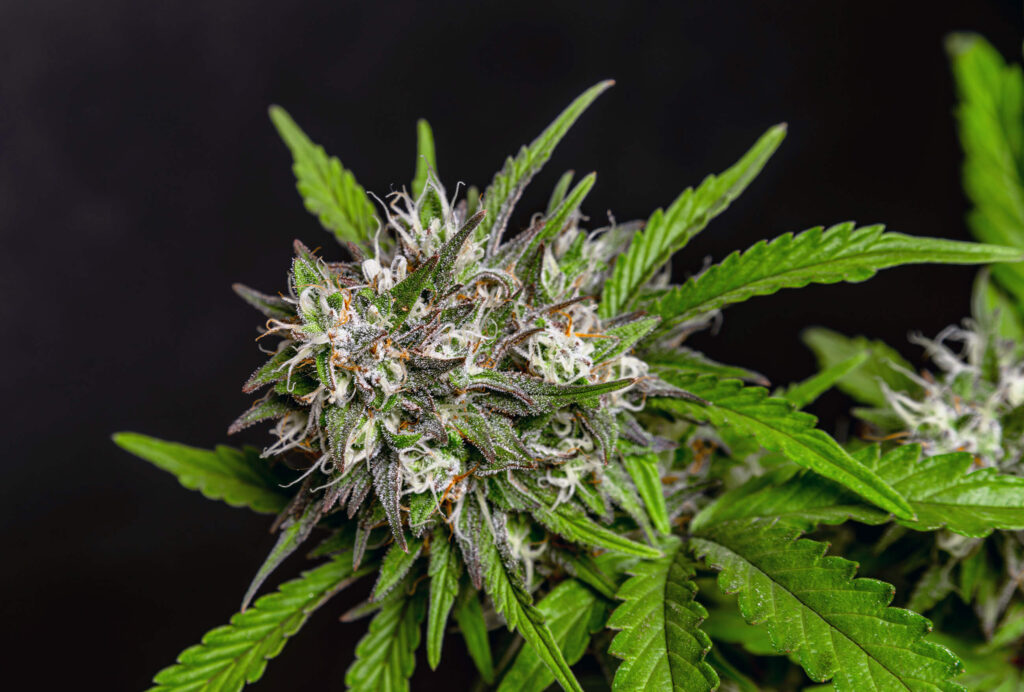
If you’re interested in super cropping, there are several good choices out there. Almost any photoperiod strain will do, but generally, the best choices are strains that are more resilient to stress and damage and also feature thick, robust stems. Indica-dominant hybrids like Critical Skunk, Northern Lights, or Purple Bud make great choices.
In the end, super cropping is a technique that any grower should consider experimenting with once they’ve mastered the basics. The results can be truly impressive if done properly and growers experienced in super cropping swear by the practice. Don’t be afraid to try it out, just remember to be careful. Your cannabis plants are hardy and can handle a lot of stress, but they’re not invincible.
