


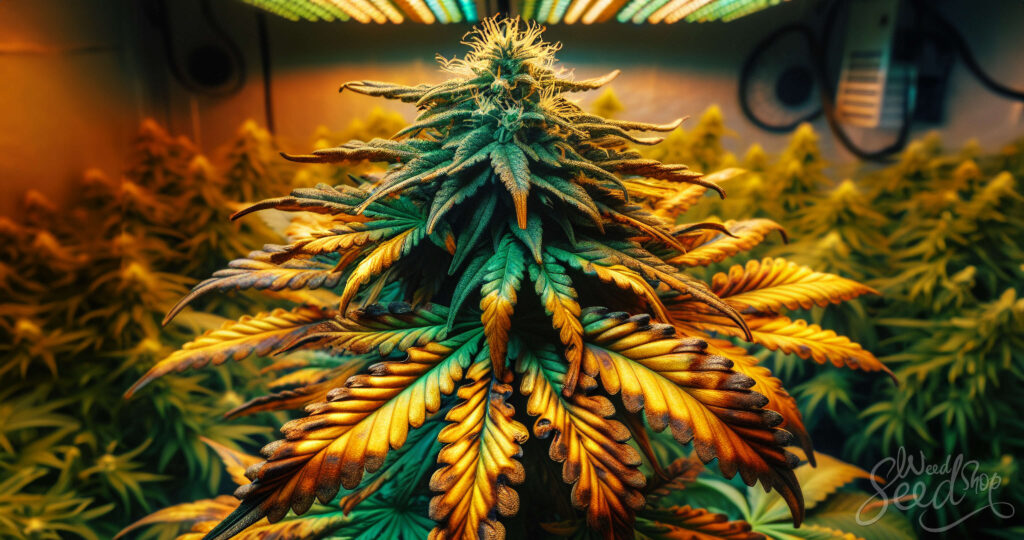
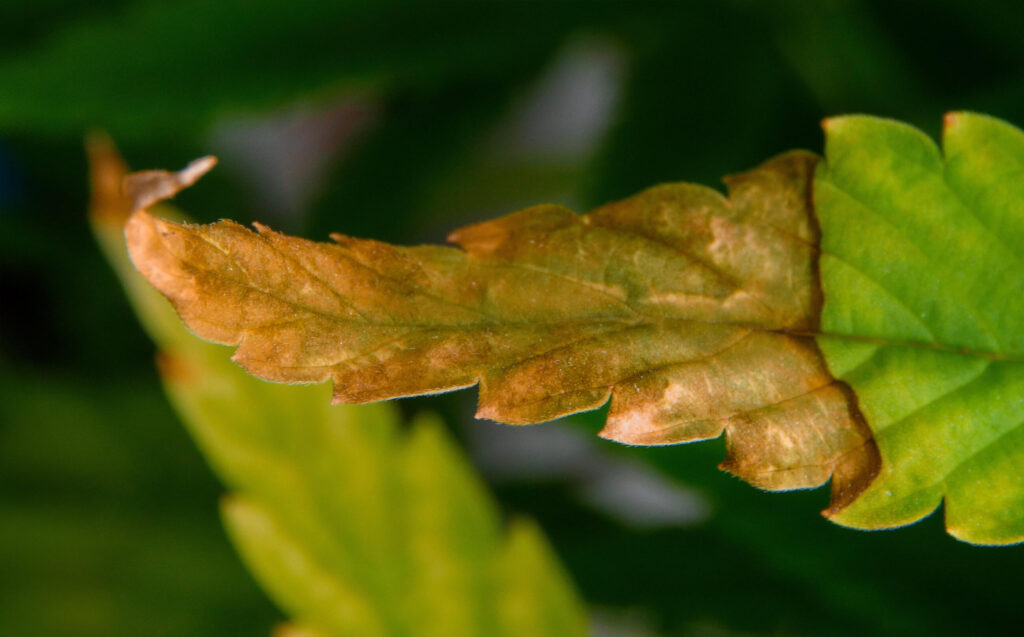
Just like anything else in life, it’s possible to overdo even the most necessary nutrients. When a cannabis plant is given more nutrients than it can use, these nutrients will become deposited in leaf tips causing them to become brown and brittle. If left untreated, this damage will spread and, in the most extreme cases, can lead to the death of the plant.
- What is nutrient burn?
- How to prevent nutrient burn in weed
- Use cannabis nutrients
- Follow the instructions
- Monitor your water
- Follow a schedule
- Check your pH
- Nute burn and autoflowering strains
- Signs of nute burn in cannabis
- Nutrient burn or deficiency
- Nute burn or light burn?
- Nutrient burn late in flowering
- Severe nutrient burn
- Can you save a cannabis plant from nute burn?
- 1. Flush the growing medium
- 2. Adjust your feeding schedule
- 3. Monitor plant health
- 4. Trim affected leaves
- 5. Maintain optimal growing conditions
- Food for thought
What is nutrient burn?
When growers talk about nutrient burn, they’re referring to plants undergoing significant damage due to an excess of nutrients. This can rapidly overwhelm the cannabis plant’s ability to process and utilise nutrients and results in visible symptoms such as burnt or scorched leaf tips, yellowing or browning of leaves, and generally slowed growth. Nutrient burn can occur in both soil and hydroponic setups and can affect plants at every stage of growth in the cannabis plant.
The leading causes of nutrient burn include over-feeding, sloppy nutrient mixing, or improper pH levels in the growing medium. Going overboard with feeding schedules, using nutrients above the recommended dose, or failing to periodically flush your soil can all contribute to nutrient buildup and lead to burn. Furthermore, environmental factors including temperature, humidity, and light intensity can all hinder nutrient uptake and increase the risk of burn.
If left untreated, nutrient burn will certainly stunt growth and reduce yields. However, it’s not typically fatal to cannabis plants and can usually be fixed if spotted early enough. However, if left untreated, it is liable to cause severe damage to a cannabis plant’s health and productivity. Quick steps, such as flushing the growing medium with pH-balanced water to remove excess nutrients and adjusting feeding schedules, are vital to minimising any damage and ensuring healthy growth.
How to prevent nutrient burn in weed
Use cannabis nutrients
This might sound obvious, but many novice cannabis growers think that the same stuff you use for houseplants can be used for cannabis. There’s a reason why so many companies make products tailored for weed; the plant has unique needs.
While it’s certainly possible to use nutrients or fertilisers designed for a home garden, you’re not doing yourself (or your plants) any favours. If you’re not sure where to start, get any of the available three-part packages. These tend to include a blend designed for vegetation, one for flowering, and a bottle of micronutrients.
Follow the instructions
The best way to prevent nutrient burn in your cannabis plants is to meticulously follow the instructions provided by the manufacturer of your nutrients. These guys have done the tests and have formulated their product to function under specific guidelines. A lot of new growers think that “more = better” when it comes to feeding plants, but that simply isn’t the case. Most nutrient mixtures only require a few millilitres per litre of water. Don’t go overboard.
Keep in mind that the amounts on the bottle are often the “maximum” dose. If you’re having issues (or know that a strain is prone to burning) start with less than listed. It’s never a good idea to go above the prescribed amount.
Monitor your water
Even if you’re following the manufacturer’s exactly, there’s always room for error. A Total Dissolved Salts (TDS) meter is a vital tool for any grower as this is the only accurate way to get a reading of just how concentrated your feeding solution is. These meters measure the TDS of a solution in Parts Per Million (PPM) and will tell you if your nutrient mixture is properly balanced.
The correct PPM for a nutrient collusion changes as plants progress. A general outline of the appropriate concentrations looks something like this:
| Stages of growth | PPM (Particles per million) |
| Seedlings | 100 – 250 |
| First half of vegging | 300 – 400 |
| Second half of vegging | 450 – 700 |
| First half of flowering | 750 – 950 |
| Second half of flowering | 1000 – 1600 |
| End of flowering and harvest | 0 |
Even with a perfect mixture, no two cannabis plants will perform identically. It’s always a good idea to water your plants without any nutrients every few waterings to make sure that they have had a chance to use up all of the food that they were previously given.
Follow a schedule
While you should give your cannabis plants as much water as they need (while avoiding overwatering), nutrients are a bit more precise. There’s a limit to how quickly plants can absorb nutrients from the soil and going above that is going to cause problems.
While the most obvious cause of nute burn is overfeeding, there’s a little more to it than that. Letting your soil get too dry is a leading cause of nutrient burn as the water gets absorbed faster than the nutrients. This is why you should skip adding your nutes every 3-4 waterings.
Check your pH
The pH balance of a nutrient solution is absolutely vital to a cannabis plant’s ability to uptake the nutrients. If the pH level is outside of the 6.0-7.0 range, then nutrients will become “locked out” and the plant won’t be able to uptake them.
In soil, for example, if the pH is too high or too low, certain nutrients may become unavailable to the plant even if they are present in the soil. This can cause the plant to show signs of deficiency or excess even if the nutrients are being supplied appropriately.
In hydroponic systems, maintaining the correct pH is even more crucial as the plant directly uptakes nutrients from the water. Fluctuations in pH can rapidly affect nutrient availability and uptake, potentially leading to nutrient burn or other issues. Note that the proper pH for hydroponics systems is slightly lower than soil; around 5.5-6.5.
Nute burn and autoflowering strains
Autoflowering strains have a few advantages over their photoperiod counterparts, most notably, their speed and heartiness. On top of these benefits, there’s another that’s less often discussed; autoflowering plants require fewer nutrients than photoperiod plants. While the exact numbers vary from strain to strain, it’s a good idea to start with about half of the “recommended” dose and go from there. Remember, it’s always easier to add more than to remove any.
Related post

Signs of nute burn in cannabis
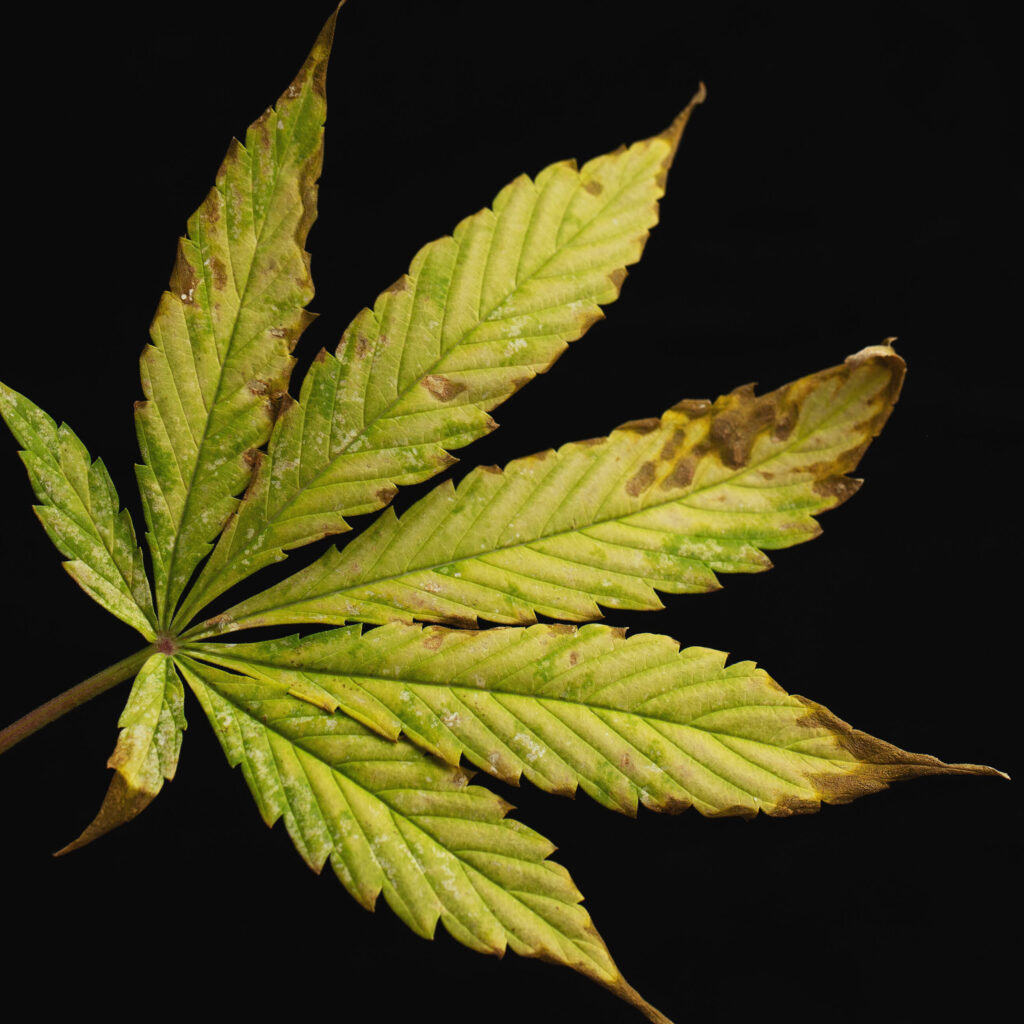
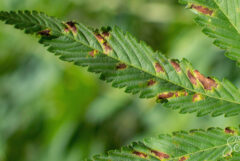
So, with that out of the way, how can you tell if your plants are being overfed? The most common symptom is browning of the tips of the leaves. This is likely to start all across the plant at once and can first present as simple bending or curling before the burning starts. If you’re seeing yellowing at the top of the plant, it is likely an overabundance of micronutrients while yellowing at the bottom could be a sign of too many macronutrients.
However, since nutrient burn typically happens slowly, it can be possible to spot it before it becomes a problem.
A few of the earliest signs of overfeeding can include:
- Leaf tips bending downwards at 90°
- Leaf stalks and/or branches turning dark red or purple
- Bright green leaf tips paired with dark green leaves
Nutrient burn or deficiency
If you’ve ever dealt with nutrient deficiency, then the above symptoms likely sound pretty familiar. It’s true that many of the symptoms of nute burn can also be symptoms of certain nutrient deficiencies, but with enough experience, it’s possible to tell them apart.

Nitrogen and potassium deficiencies can both cause leaf yellowing which could be confused for nute burn. If a plant has too little nitrogen, it will start to yellow at the leaf tips while a lack of potassium will cause yellowing in spots across the leaf.
The only way to definitively know if yellowing is due to overfeeding or underfeeding is to carefully monitor how much you’re giving your plants.
Nute burn or light burn?

While there are two ways to burn a plant, they present rather differently. Like, nutrient burn, light burn can cause leaves to turn brittle, yellow and brown. However, confusing the two isn’t terribly likely. Nutrient burn starts at the tips and can manifest all across the plant. On the other hand, light burn appears only at the uppermost growth and typically affects the whole leaf.
If you’re not sure, check out our complete guide on light burn to see if those more closely match what you’re seeing. Note that if the problem is nutrient burn, reducing light is a bad idea as this will further limit the plant’s ability to use the nutrients it already has.
Related post
Nutrient burn late in flowering
Nutrient burn during the vegetative phase of growth isn’t the end of the world. If caught quickly, it can be easily treated and all that you’ve lost is a week or two of development time in the worst of cases. However, nute burn during flowering can cause serious issues.
Nutrient burn during flowering is particularly concerning as it can easily affect bud development and ultimately reduce yields. While not typically fatal, severe cases can significantly impact the quality and quantity of the harvest. During this stage of growth, plants are more susceptible to any imbalance and excesses can disrupt the delicate process of bud formation.
Fortunately, nutrient burn can easily be managed if detected early enough. Immediate actions include flushing the growing medium with pH-balanced water to remove excess nutrients and restore balance and double-checking your feeding schedule. Adjusting feeding schedules to provide the right amounts of nutrients for the flowering stage will help prevent further damage. You’ll need to keep a close eye on things going forward, if it happened once, it could happen again.
Prevention is key to avoiding nutrient burn during the flowering phase. Properly calibrated nutrient solutions, regular monitoring of pH and nutrient levels, and adherence to feeding schedules can all help reduce the risk of nute burn.
One common additive that many growers use is so-called “bud boosters”. These are powerful mixtures of nitrogen of potassium that are designed to give your plant a little something extra to work with. When used sparingly, these nutrients are incredibly beneficial, however, when used too frequently, they are likely to cause mild to moderate nutrient burn during the flowering phase. Use with caution and follow the manufacturer’s guidelines.
The closer it is to flowering, the less stress a plant can withstand. Don’t ever start flowering until you’ve fixed any issues that occurred during vegetation.
Related post

Severe nutrient burn
The severity of nutrient burn can vary wildly based on things like the degree of nutrient overload, how long it goes on, and the overall health of the plant. If not dealt with promptly, severe cases of nutrient burn can lead to significant damage and will almost certainly limit the plant’s ability to fully recover.
In mild cases, nutrient burn only affects certain leaves or portions of the plant, resulting in visible symptoms like burnt leaf tips or yellowing. If caught and treated quickly, plants can often recover from without long-term consequences.
However, in more severe cases where the entire plant is affected or symptoms continue despite your best efforts, nutrient burn can continue to the point where it significantly compromises the plant’s health and productivity. Leaves will slowly become necrotic, wilted, or crispy, and growth is likely to be severely stunted if not outright halted. In these extreme cases, the plant’s ability to photosynthesise and produce energy is greatly reduced, making any problems even worse.
If nutrient burn reaches a critical stage where the majority of the plant is affected and recovery seems unlikely, you just might face the difficult decision between continuing to try to save the plant or starting over with a new crop. There’s no real “guideline” here and things like the extent of the damage, the stage of growth, and the resources available all play a part. In some cases, it may be more practical and cost-effective to start over with a fresh, healthy plant rather than attempting to salvage one that is severely damaged.
In the end, preventing nutrient burn through proper nutrient management, monitoring, and intervention is the best approach to protecting the health of your plants and maximising yields. Regular monitoring and early detection of symptoms can help address issues before they reach the point of irreparable damage.
Can you save a cannabis plant from nute burn?
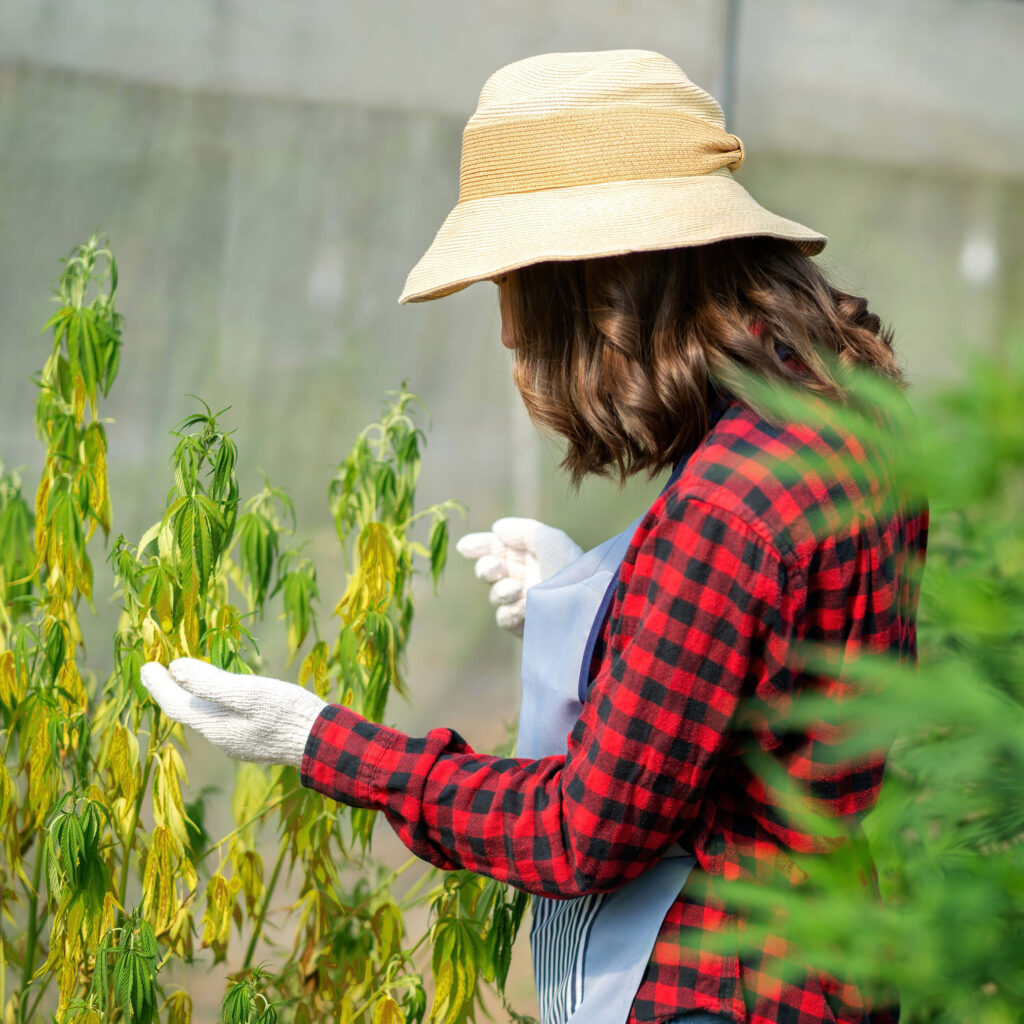
Luckily, saving a plant from nutrient burn is fairly easy if caught quickly. There’s no one “magic bullet” and any fix will likely take at least a week to show improvements.
1. Flush the growing medium
Whether it’s soil or hydro, the first thing you’ll need to do is to Immediately flush the affected plants with pH-balanced water to remove excess nutrients and restore the pH balance.
2. Adjust your feeding schedule
Double-check the feeding schedule (and amounts) you’ve been using to ensure that the plants receive the correct levels of nutrients for their stage of growth. Remember to skip feeding every few waterings.
3. Monitor plant health
Keep a close eye on any affected plants for signs of improvement or worsening symptoms. Adjust nutrient levels and feeding schedules as needed based on plant response.
4. Trim affected leaves
Once a leaf has been damaged, it’s not going to recover. Carefully trim away any affected leaves to promote new growth and prevent further stress on the plant.
5. Maintain optimal growing conditions
Make sure that things like temperature, humidity, and light levels are within the optimal range to support plant recovery. If any of these get too far outside of optimal, the plant’s ability to properly uptake nutrients can be affected.
Related post
Food for thought
So, to summarise, understanding what causes nutrient burn is crucial for maximising yields and ensuring plant health. Reducing the causes, spotting the symptoms, and addressing nutrient burn promptly can have significant impacts on bud development and overall harvest quality.
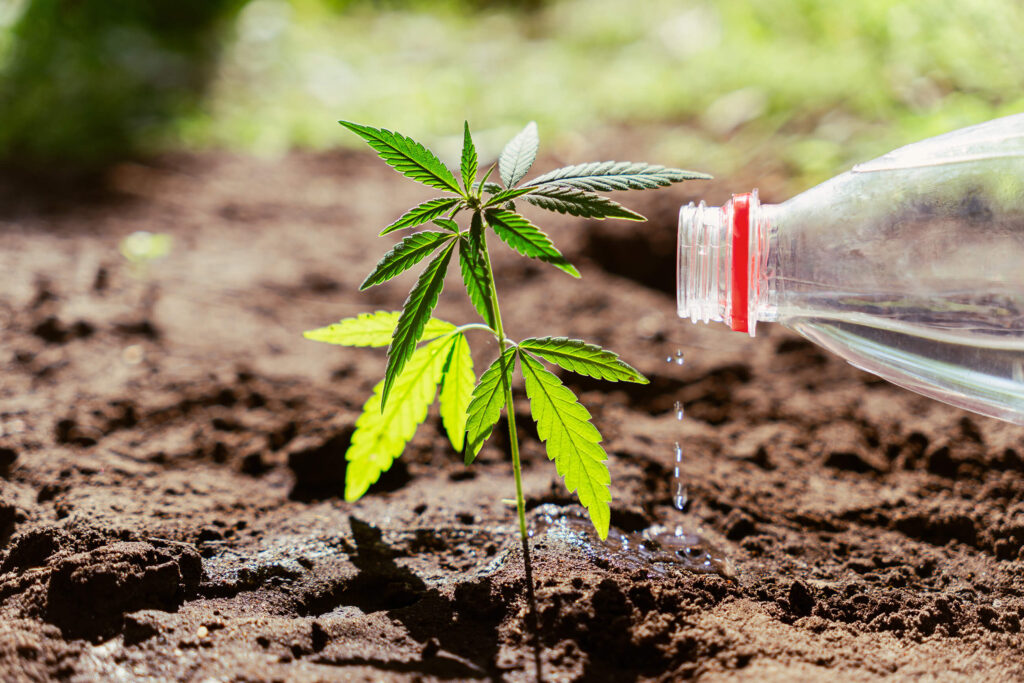
Early detection through regular monitoring allows you to take immediate action, such as flushing the growing medium and adjusting feeding schedules. While severe cases may pose challenges, prevention through proper nutrient management remains key. By implementing these strategies, it’s possible to handle nutrient burn without much hassle, safeguarding your crops and maximising your output.
