


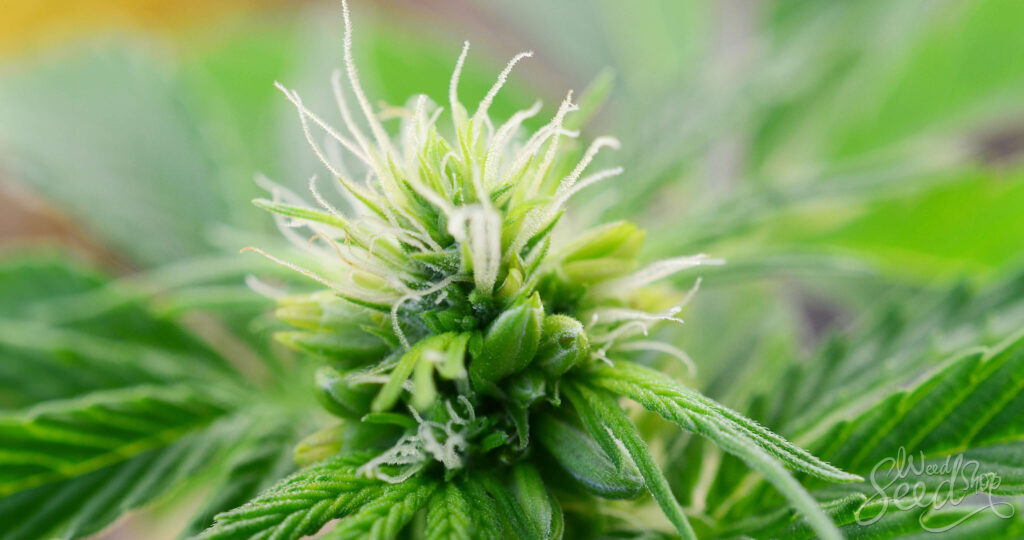
While it’s fairly rare, hermaphroditic plants are a problem that almost every grower will have to deal with at one time or another. If you grow enough plants, finding a hermie is only a matter of “when” and not “if”. Luckily, if you know what you’re looking for, hermies can be spotted early and dealt with before they cause any major problems.
What is a hermaphrodite weed plant?
So, what exactly is a hermie? In short, it’s a weed plant that has developed both male and female reproductive organs meaning that you might get pollen sacs on female plants. To better explore what this looks like, it’s a good idea to first briefly go over what normal male and female plants look like before highlighting what to look for in a hermie.
Female plants
If you’ve ever seen weed, you know what a female weed plant looks like. Dense flowers, covered in white or orange hairs and sparkly trichomes, growing from the tops of every branch. However, that’s only what the plant looks like after several weeks (or months) of flowering. The very earliest signs of a female plant are more subtle.
Assuming you’re using photoperiod seeds, the first signs of flowering will appear about 2 weeks after switching the lights to a 12/12 schedule. Not that if you’re using autoflowering seeds, these signs are the same, but they will appear at a pre-defined point, typically 2-4 weeks after sprouting.
The very first signs of a female cannabis plant will appear at the nodes where branches come off of the main stem. Here, you’ll begin to notice some small white hairs pop up all across the plant. After a few days, you’ll start to see small clumps of these hairs appearing at the tops of branches. Over the next few days/weeks, these will explode in size and eventually develop into the flowers.
Male plants
Male cannabis plants are the kind of thing that 99% of weed users will never see. Aside from a few niche uses, they’re largely unwanted by most growers; this is why every company sells so-called “feminized” seeds. These are seeds which have had any male chromosomes removed, which ensures a nearly 100% chance of any given seed being a female.
But, if you’re just growing “regular” seeds, or just something random that you found at the bottom of a baggie, you have anywhere from a 35%-50% chance of each seed being a male. In the event that a weed plant is a male, you’ll start noticing the first signs a little bit faster than a female—about a week after switching the lights to flowering.
The early signs of a male plant will also appear at the inner nodes, but these won’t be hairs. Instead, you’ll notice small balls forming on the bottom of the branches. These are pollen sacs and they are very much something that you want to avoid in a grow room. Cannabis doesn’t need pollinators like bees, these weed plants spread their pollen through the air, so a plant bursting a pollen sac in a closed grow space is a surefire way to pollinate every female plant in the room.
This is a major problem because if a female cannabis plant is pollinated, then all of the plant’s energy will go into producing seeds instead of flowers. You’ll still get buds from a pollinated plant, but they’ll be smaller, less potent, and full of seeds.
These sacs tend to burst 4-5 weeks into flowering, so spotting and removing males early is a must.
How can I spot hermaphrodite plants?
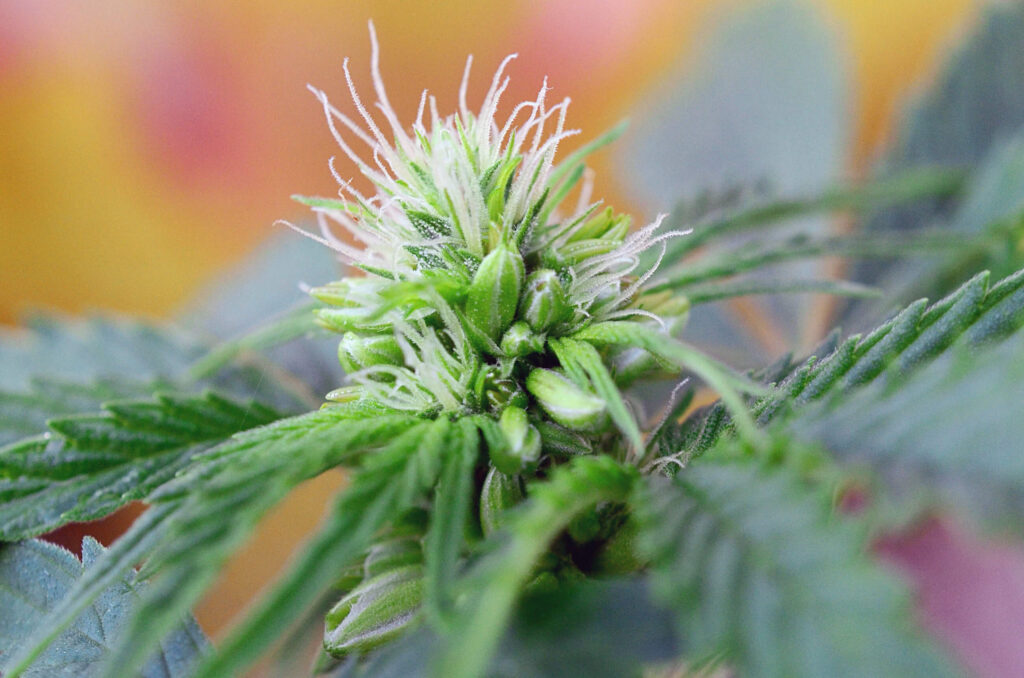
OK, so now that we know what male and female plants are supposed to look like, what are the actual signs of a hermaphrodite? Well, there are two types of hermies out there, true hermaphrodites and bisexual flowers.
True hermaphrodites
True hermaphrodites grow both sets of reproductive organs and are capable of pollinating and being pollinated. If you’re noticing that your weed plant is growing pollen sacs, it’s at least not a pure female. To determine if it’s a hermie, just trim off the pollen sacs. If pistils appear, then it’s a hermie and if they don’t it’s a male.
If left alone, these plants will develop full male and female parts which will result in flowers and pollen sacs growing together at each inner node. While the best bet in this situation is likely just to cut down the whole plant, that’s not necessarily always an option. If you’re committed to working to save the plant, it is technically possible. Check out the “What to do with hermie plants” section down below for more details.
Bisexual flowers
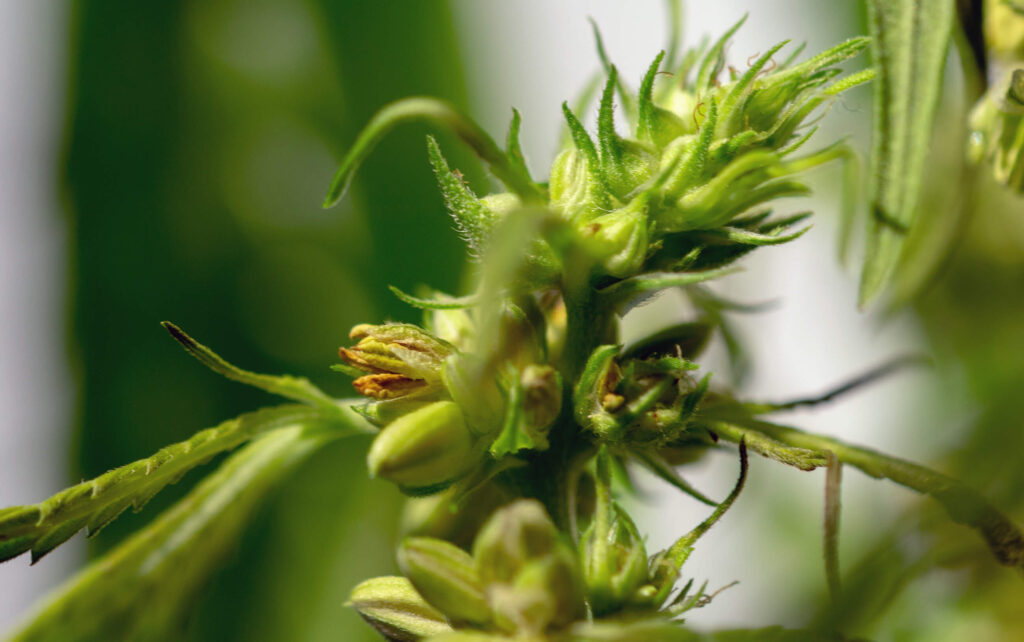
True hermaphrodites are quite rare overall, but there’s another issue that’s a bit more common; bisexual flowers. Unlike hermies, these are female plants that, for one reason or another, have developed stamens as well as pistils. Stamens are the part of the male flower that actually produces the pollen. In male weed plants, these are found within the pollen sac and aren’t typically visible. However, in female weed plants, these stamens are easily spotted.
Sometimes, a plant female plant will begin to develop small, bright yellow stamens that stick out from the centre of existing female flowers. At first glance, these might look like pistils, but their colour is a dead giveaway. These “bananas” (or “nanners”) can appear as a single thick yellow protrusion or as small bunches.
Unlike pollen sacs that need time to mature before busting, these bananas can start pollinating as soon as they appear. While these can be plucked individually, it may be best to remove the entire buds as these female plants can produce seeds without males.
Related post
How soon can I spot hermies?
Once you start flowering your cannabis plants, be sure to check the inner nodes every day. If you don’t notice any small balls forming within the first week (especially if you see white pistils growing in), then you’ve almost certainly got a female plant. While true hermaphrodites can be spotted just a few weeks into growing, bisexual flowers can take longer.
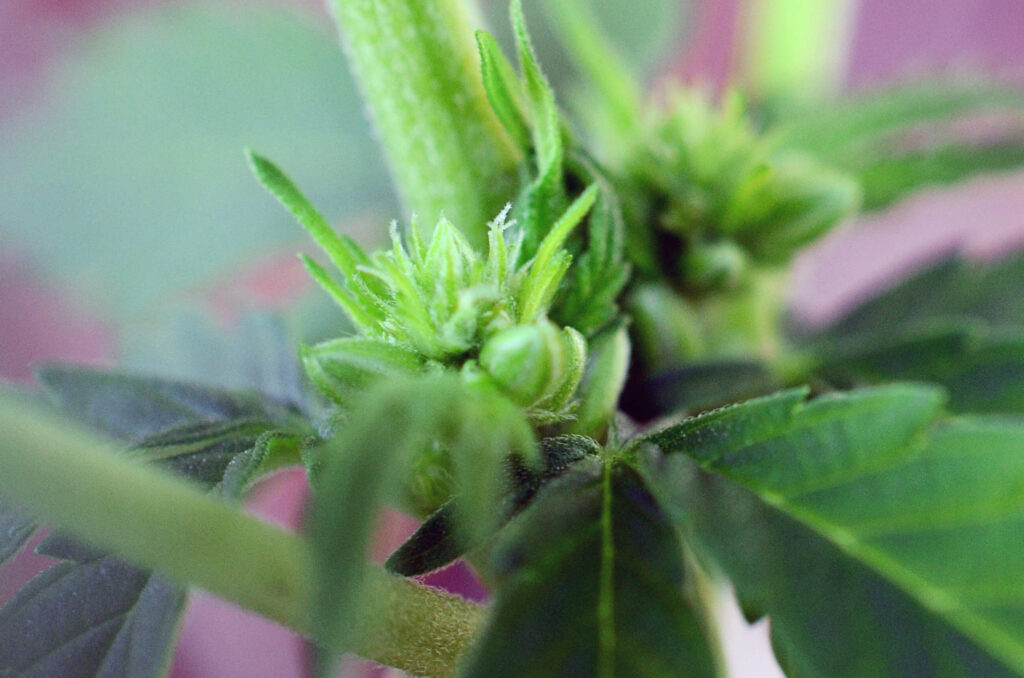
Typically, these bisexual flowers don’t appear until well into flowering and can even happen as late as the pre-harvest flush.
What causes a plant to hermie?
Why does this happen at all? The two primary causes of a plant becoming a hermaphrodite are genetics and stress.
1. Genetics
This is the leading cause of true hermaphrodism in cannabis plants. Since a plant’s sex is determined by its genes, some strains have a predisposition to hermaphrodism. This can become more common as plants are bred for more specific traits. Much like how certain dog breeds can be more at risk of certain illnesses, certain weed strains can be more at risk of hermaphrodism.
On the other hand, bisexual flowers are caused by a different genetic component. If a female plant that grows a stamen is allowed to pollinate itself, these seeds will almost certainly be female; this is how many feminized seeds are produced. These seeds, however, are going to inherit the mother’s genetics and will have a much higher chance of developing bananas than a normal female.
The odds of any given female weed plant developing bisexual flowers are fairly low, but they are higher than with regular seeds. However, as mentioned above, regular seeds can have up to a 50% chance of being male, meaning that even if feminized seeds had a 10% chance of going hermie (the odds are much, much lower, by the way), your odds of getting a non-viable plant are still lower with feminized seeds.
2. Stress
This is the far more likely reason for a plant to turn hermie. While genetics is more likely to cause a true hermaphrodite, bisexual flowers are far more likely to be caused by stress and other environmental factors.
Everything from the wrong nutrients to inconsistent lighting schedules can cause female plants to develop bananas. Making sure that your plant is kept in a well-regulated, consistent environment is necessary.
Related post
How to prevent hermaphrodite plants
While there’s nothing that you can do about the genetic component of hermaphrodism, it’s possible to monitor the plant’s stress and keep it from going hermie. Most of the time, if a weed plant develops bisexual flowers, it’s a result of more stress than a plant can handle during the flowering period.
1. Reduce stress
Weed plants are resilient, but they aren’t invincible. Pest infestations are one of the most common stressors on plants and, if untreated, can destroy an entire crop. Even if you’re able to eliminate the pests, permanent damage may have been done. If a plant feels like it might be facing the end of its life, it can turn hermie and pollinate itself in a last-ditch effort to pass on its genes.
With that in mind, overly aggressive pruning or trimming can cause a plant to develop bisexual flowers if done too late into flowering. Typically, once a cannabis plant has begun developing proper flowers, it’s too late to do much more trimming. However, certain HST techniques call for it, including some that ask you to trim the buds mid-flower. While these can produce positive results, the risks to the plant are simply not worth it.
2. Consistent light schedule
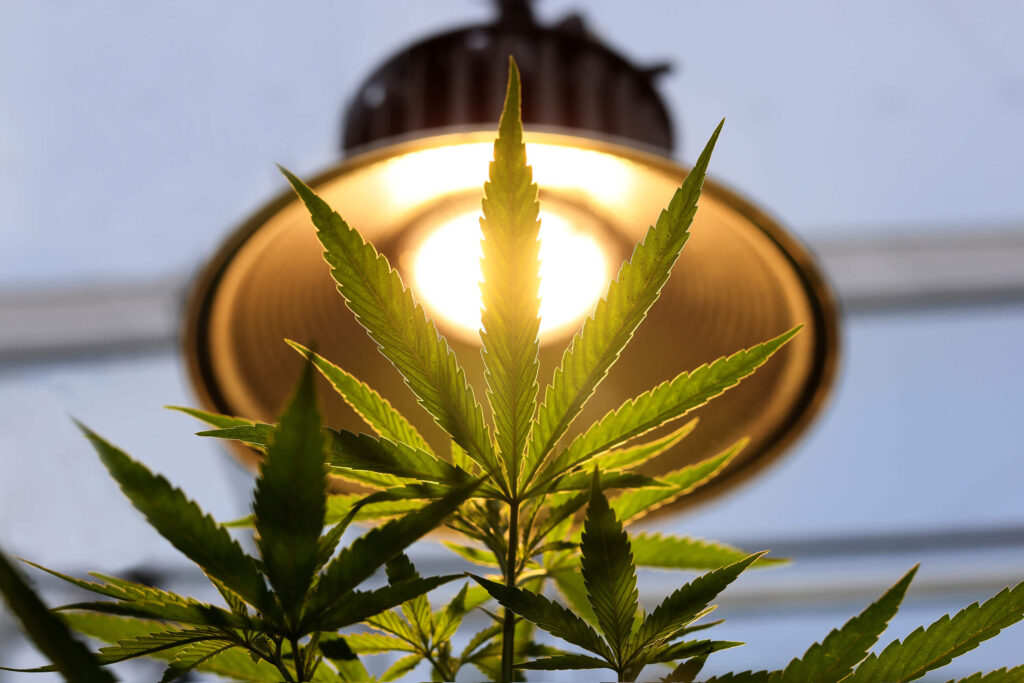
One of the major influences on a plant’s development is the light cycle it’s under. Photoperiod plants won’t start flowering unless they’re kept under 12 hours of light and 12 hours of darkness, and any variations from a set schedule can cause the plants undue stress.
Inconsistent lighting schedules or intensities are a common cause of bisexual flowers in cannabis. Be sure to stick to a firm schedule and don’t deviate from it. While a single change during something light daylight saving time is fine, changing the schedule by more than an hour (or more than once) is not ideal.
Likewise, don’t rely on yourself to just remember the schedule and turn the lights on and off manually. Nobody is 100% consistent and forgetting to turn the light on or off for even a few hours can cause significant stress on your cannabis plants.
It’s also worth mentioning that the level of light makes a difference here. While we all know that more light is better, there is a limit. Light stress can lead to hermaphrodism in plants if left unchecked.
Lastly, plants need darkness to flower. While it’s not always feasible to eliminate 10% of light leaking into a grow space (nor is it necessary, wild plants have the moon, for example), the less light that gets in, the better.
Light leaks are one of the most common causes of hermie weed plants. Don’t turn on the lights (or even open the door) during nighttime unless it’s absolutely necessary. If you do need to deal with something during the plant’s dark period, use green LED lights if you have them. The chlorophyll in the leaves can’t absorb green light nearly as well, which will be less disruptive to a plant.
3. Avoid temperature fluctuations
This is another major cause of stress for many plants. Cannabis thrives in a temperature range of roughly 20°-30°C and straying too far outside of this range is never healthy for the plant. Likewise, temperature fluctuations, even inside of the optimal range, can stress out a plant. If you’re growing in a particularly cold area, you may want to consider automating a space heater to turn on when your lights turn off to help keep things consistent.
4. Provide nutrients
Using poor-quality nutrients or soil can deprive your plants of the vital nutrients they need to thrive. If a plant is forced to flower without adequate nutrients, it may decide that the environment isn’t right and self-pollinate in hopes of giving the next generation a better chance.
Related post
What to do with hermie plants
If you notice that your plant is developing hermaphroditic traits, you’ve got two options: toss it or try to save it. If you’re growing several weed plants, and you notice that one of them is growing pollen sacs (whether it’s male or hermie), your best bet is to simply chuck it out. The risk of these sacs bursting is simply too high and the damage would be too great. In a sealed grow space, one male plant can pollinate every female and ruin an entire harvest.
However, if this is your only plant, then it is possible to bring it through to harvest, but it requires great care, attention, patience, and dedication.
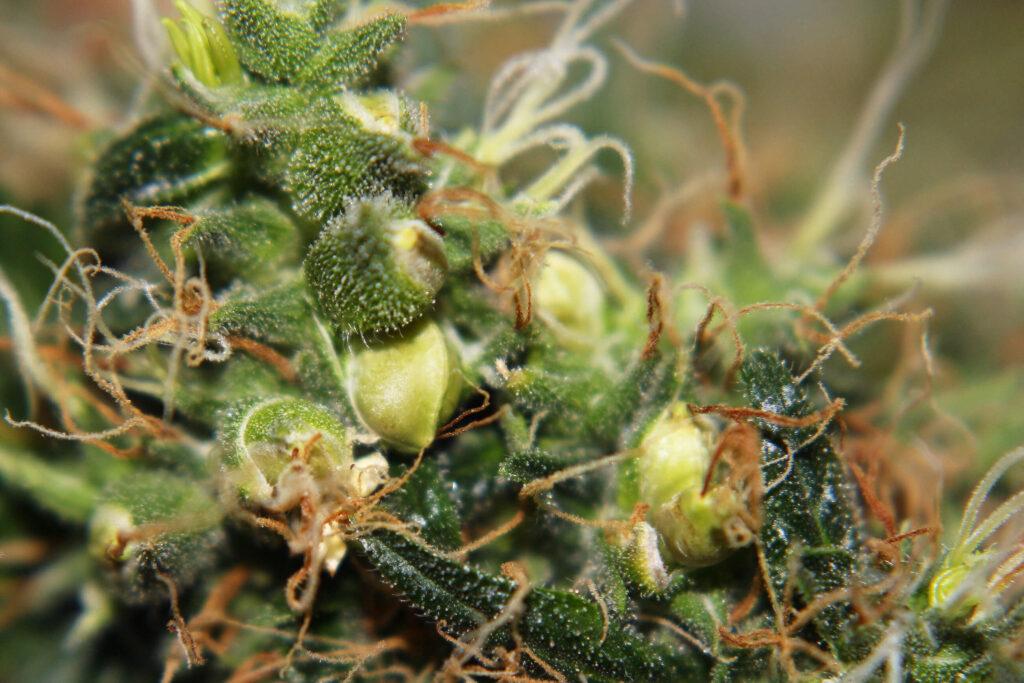
From the time that a pollen sac appears to the time that it bursts, you’ve got anywhere from 2 to 5 weeks. In that time, it’s possible to carefully trim the sacs off one by one. Since they tend to grow in before the female flowers, you should be able to get a head start and stay ahead of the curve.
This is, however, incredibly difficult as even a small plant can produce hundreds of pollen sacs and even a single one can do massive damage to a plant’s yield. To further complicate things, more pollen sacs will continue to grow and these will be increasingly obscured by female flowers.
This technique is not ideal and I can’t personally recommend it but it’s important to be aware of all of your options.
If your plant started off as a female and turned hermie during flowering, then you have more choices that are worth considering. If these bananas appear during the first few weeks of flowering, you’re likely best off tossing the whole plant. Again, this is much easier to deal with if you’re growing more than one, but if it’s the only cannabis plant you’ve got, it can potentially be saved.
If you start to notice bananas, it’s important to remove them immediately. Using the finest-tipped scissors you can find, carefully remove the stamens as close to the base as possible. Typically, these bananas occur on only a few flowers (they can occur all over a plant), so it may also be worth just removing the entire flower and leaving the rest alone.
If stamens begin appearing later in the flowering stage, it’s best to just remove the affected bud right away to try and preserve what’s left. In the unfortunate event that you’re too late and the plant has already been pollinated, your best bet is to simply harvest a bit early. Typically, seeds take 15 days to form after pollination, so you just might be able to beat the clock.
Related post

Can I smoke hermie weed?
Yes, it is technically safe to consume the flowers from a hermaphrodite cannabis plant. However, ‘safe’ doesn’t mean ‘enjoyable’. For starters, if the flowers have been pollinated, then the bud will be full of seeds. These make processing the flowers more difficult and greatly affect the taste if accidentally smoked.
Even if the plant wasn’t fertilised, the pollen sacs present in the bud are likely to affect the taste and could cause certain issues if a user is allergic to pollen.
Lastly, weed from pollinated plants will be far less potent than from unpollinated plants. So, even if you do manage to harvest your hermie, you’ll get less weed that is both lower potency and worse tasting.
Can I reverse a plant that turned into a hermie?
Sadly, no, it is not possible to reverse a cannabis plant that has turned hermie. At least, not anymore. Several years ago, there was a product available that was fairly successful at reversing hermaphrodism in cannabis plants. This product featured chemicals known as plant growth regulators (PGRs) and was widely sold for nearly a decade.
However, it turns out that PGRs are fairly carcinogenic and can cause several issues to both humans and the environment. While these products can still be found in certain markets, I cannot advise that anyone use them. You’re going to be better off taking the loss and starting over than trying to reverse a hermie with unsafe chemicals.
Keep it chill: Prevent hermies with a stress-free environment
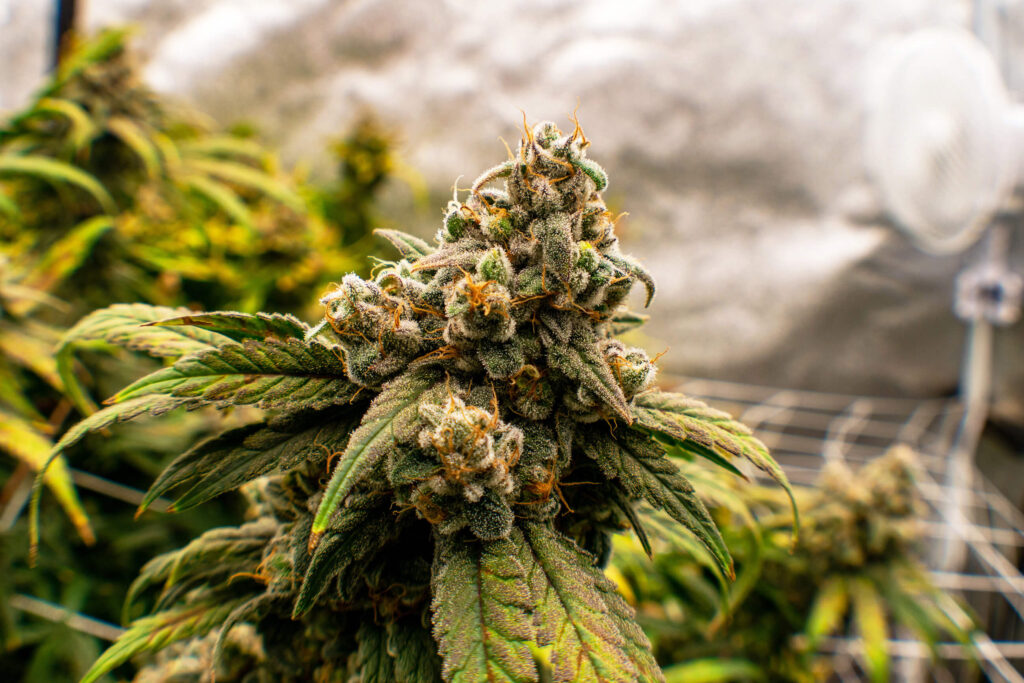
Making sure that your cannabis plants are kept in a well-regulated, consistent, and stress-free environment is the best way to prevent hermies. However, if you grow enough plants, you’ll get a hermie eventually. Knowing what to look out for early can save you major headaches down the road. Even if you need to scrap a single plant to save the rest of your harvest, it’s worth it.

I loved your explanation about hermi plants. I just started growing outdoors last spring. I live in Mexico.
I got weed and it had seeds so I planted them. I knew nothing and produced hermis. I finally got bud from I plant and it was amazing, maybe the best I’ve ever had and I used to have a card in the US.
I have a female plant now who produced 1 banana. I removed it and now she’s beautiful. I’m wondering if transplanting caused it and if she will produce good bud. I only have 2 plants so I hate to loose any.
Thanks for your help
It can and will screw up a crop almost overnight light’s came on temp. soared to 100 degree’s for some hours before I caught it !! Timer went bad it has 3 of 5 turning herm no bananas LOL the 3 were my hope of high grade meds but hey , my first rodeo still , right ? Folks ,I had a perfect grow going too ! Heavy buds covered in tric’s, I’m sick over it ! I was 2 wk’s away SHIT THE BED
I feel for you bro! Nor Cal got decimated with 4 days of over 100*. 56 hrs of no sunlight, heavy particulate and ash covered all my crop! I covered the plants and there was no UV anyway so I wanted to protect them from ash! Within 25 hrs. I have fn Naner trees! Plus I manicured to hard! The perfect storm! I’m fudged!
I’ve been growing a very long time and lately have had some issues. My last to crops have turned on me and are growing numerous banana leaves. I have extremely sterile rooms and use the TLO method, which means I make my own soil and don’t use any chemicals. I don’t have light leaks and have nice filters and mini-splits installed. Other than light, incecticide, and extreme temperature change what can cause this? As a seasoned grower I am so perplexed because I’ve grown for years without this occurring.
Thanks,
Tina
If your seed displays mild ‘nannas’ and seeding due to stress, (as it foxtailed/mild re-veg as well) will clones taken grow desirably if environmental conditions are strictly adhered to?
AH TOOl fan! I FORGOT MY PEN…
Curious? If I have a hermie pollinate a female, does the existing female become a crossbreed or is it just the seeds that will produce crossbreeds??
I experimented with a PGR and it made 1/2 my plants in Hermies, I read that this could happen but 50% Hermies is more than could, it does. But good to know if you want feminized seeds 👻.